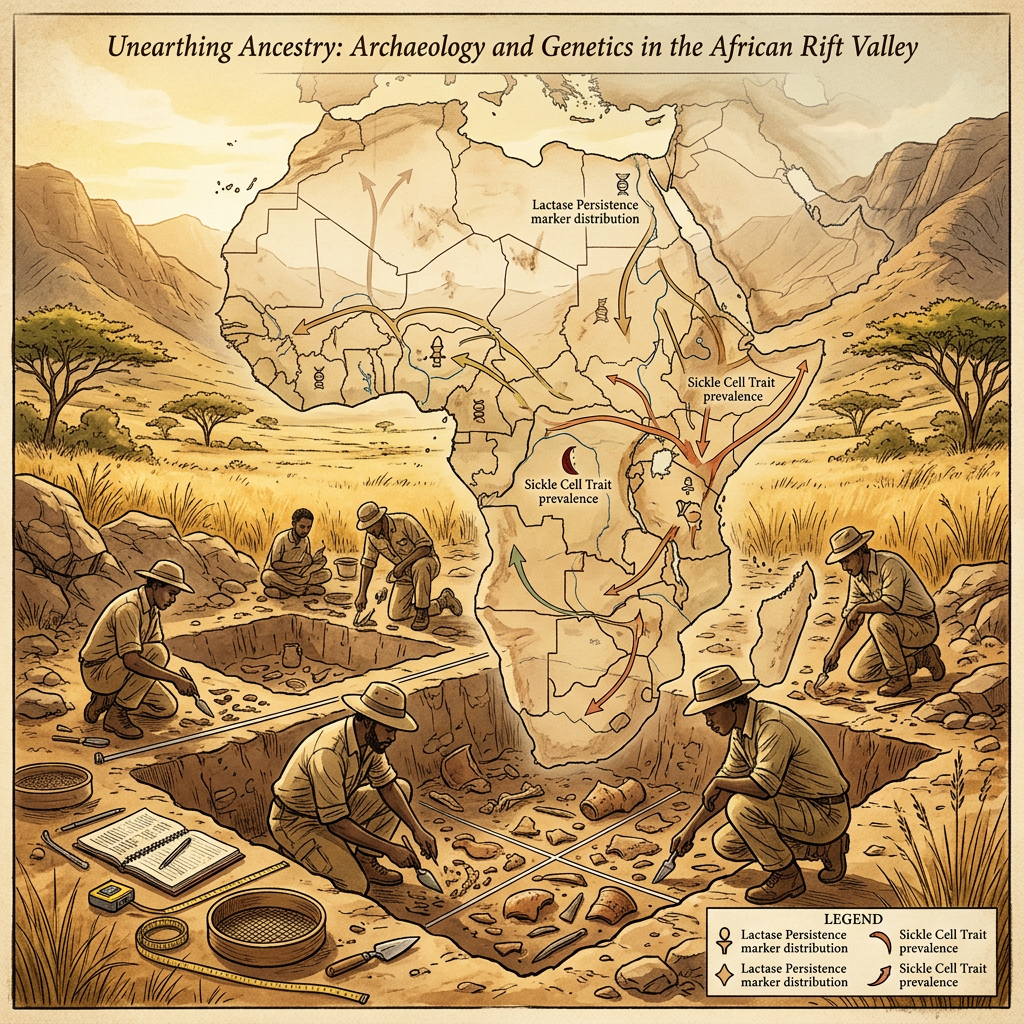
A comprehensive genomic study of remains found in the East African Rift Valley has identified the oldest known genetic adaptation to malaria. Published in the Anthropological Science Journal, the analysis of 15,000-year-old DNA reveals the presence of specific alleles that provided resistance to Plasmodium falciparum, the most deadly malaria parasite.
This research confirms that the evolutionary arms race between humans and mosquito-borne diseases was already well-underway in the late Pleistocene. The findings suggest that early hunter-gatherer populations in Africa were forced to develop complex immunological defenses long before the advent of large-scale agriculture, which was previously thought to be the primary driver of malaria's spread.