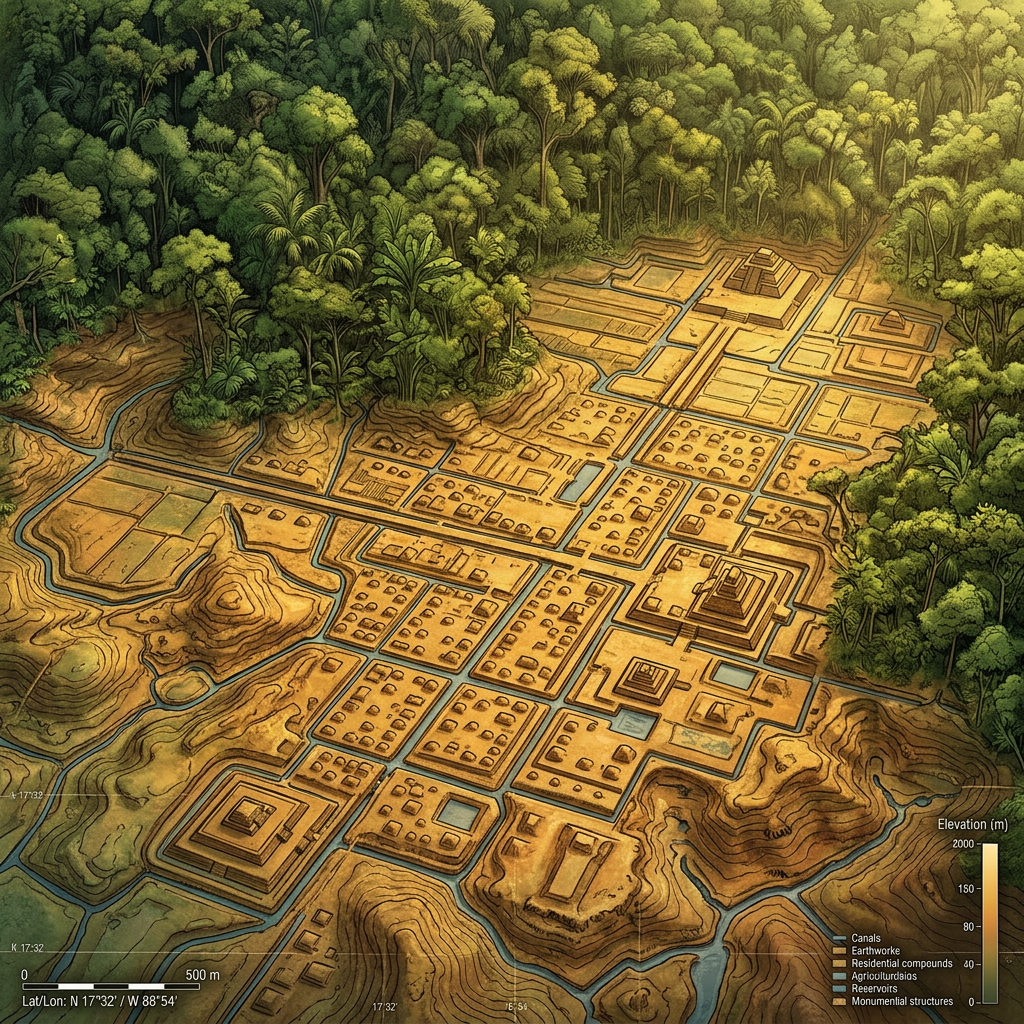
A groundbreaking study published this week reveals how ancient Indigenous communities in the Amazon basin engineered 'water orchards' to survive extreme climate fluctuations 1,200 years ago. By analyzing soil cores and LiDAR satellite data, researchers identified a sophisticated network of artificial ponds and irrigation canals designed to keep fruit-bearing trees hydrated during a century-long mega-drought.
These findings challenge the traditional view of the Amazon as a 'wild' rainforest, instead showing it as a highly managed cultural landscape. The study suggests that pre-colonial populations possessed advanced hydrological knowledge that allowed them to mitigate the effects of climate change, offering potential lessons for modern sustainable agriculture in tropical regions facing increasing water scarcity.