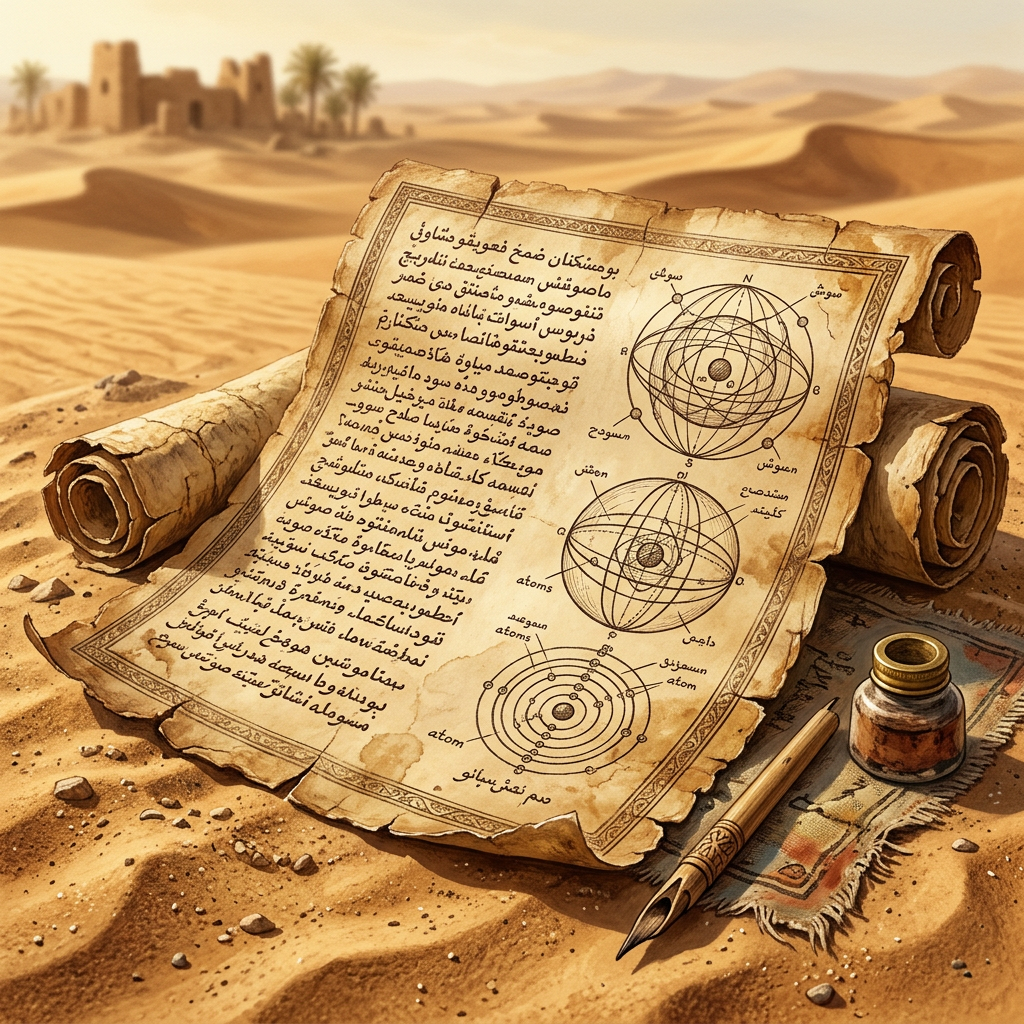
Near the ancient city of Termez, international researchers have unearthed a silk-wrapped scroll written in the Sogdian language that appears to translate and adapt Indian Vaisheshika philosophy. The text specifically discusses Paramanu (atoms) and the six categories of existence (Padarthas), but integrates them with Central Asian concepts of elemental spirits and cosmic balance. This suggests that Indian 'Naturalist' philosophy traveled along the Silk Road far more effectively than previously thought.
The scroll provides an early example of 'Scientific Philosophy' exchange, where the rigorous logic of Kanada’s school was used to provide a rational framework for understanding the physical world in a Zoroastrian-influenced cultural zone. Scholars believe this synthesis played a role in the later development of Islamic-era physics in the region.