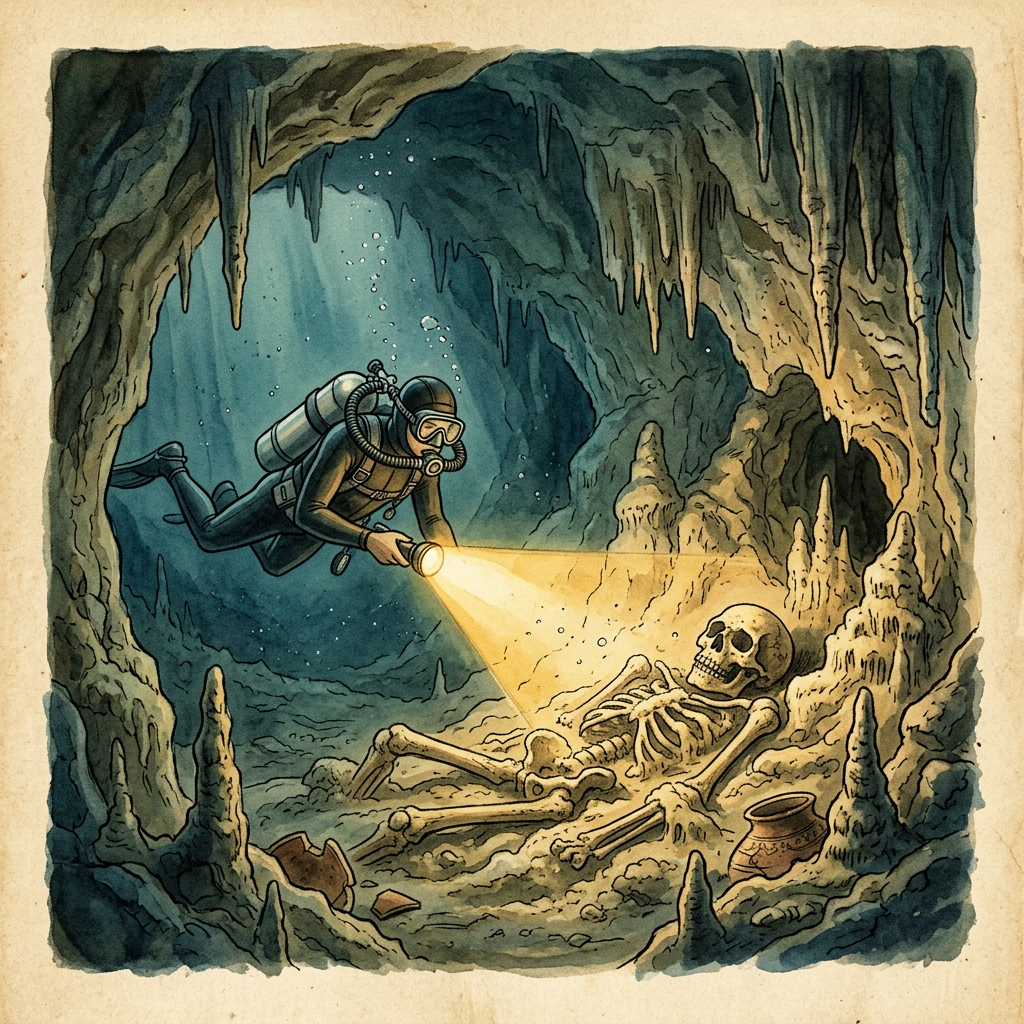
A breakthrough genomic analysis published in Nature Genetics has successfully sequenced the DNA of a 12,000-year-old individual found in the submerged Chan Hol cave system. The study reveals a previously unknown genetic lineage that diverged from the main Paleo-American groups significantly earlier than once thought, suggesting that the Yucatan Peninsula served as a distinct refugium during the late Pleistocene.
Researchers used next-generation paleogenomic sequencing to overcome the challenges of DNA degradation in warm, underwater environments. The findings indicate that these early inhabitants possessed unique adaptive traits for tropical forest survival, challenging the prevailing 'single-wave' migration model of the Americas and pointing toward a much more complex demographic history in the region.