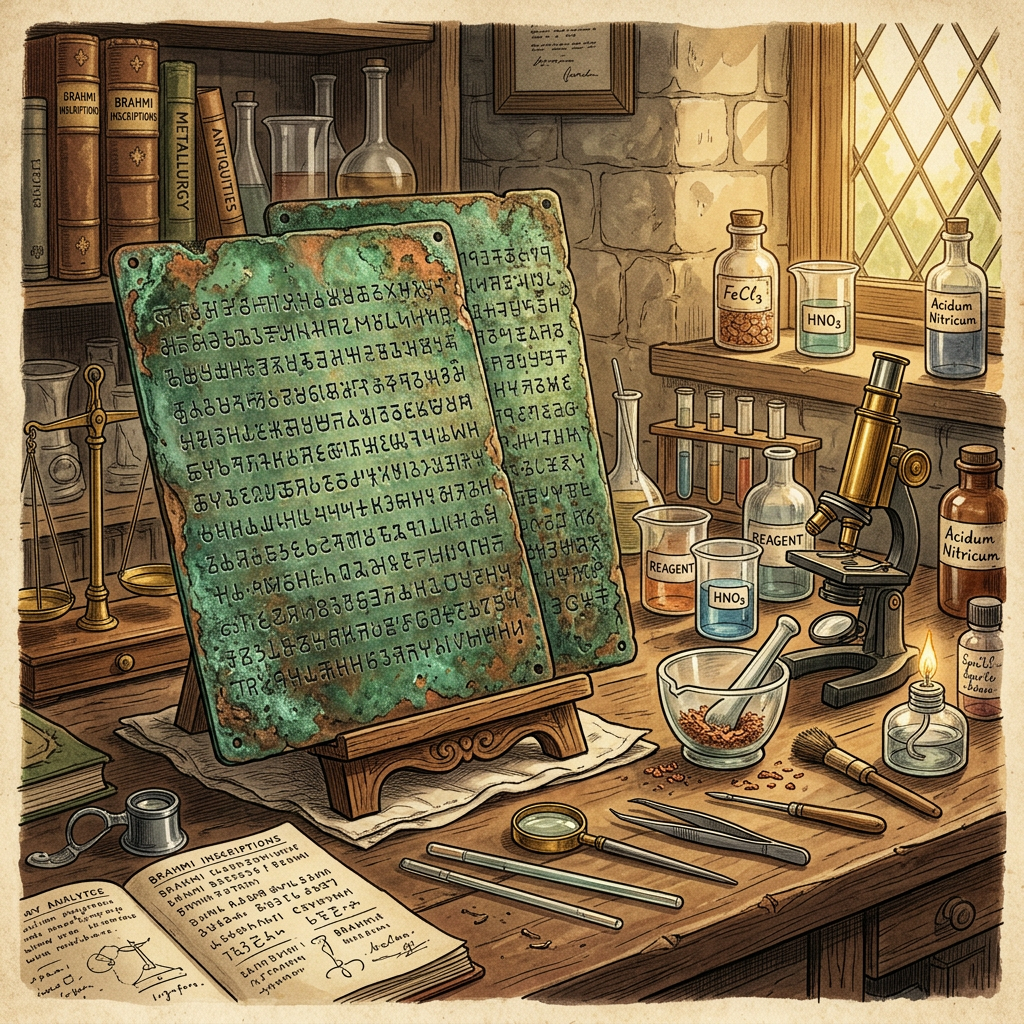
Recent excavations in coastal Odisha have unearthed a set of 2nd-century BCE copper plates, known as the 'Pandu-Lipi', which contain detailed records of maritime trade and naval administration. A geochemical analysis of the plates, published in the Indian Journal of Archaeology, reveals the use of a sophisticated arsenical bronze alloy designed specifically for corrosion resistance in saline maritime environments.
The study suggests that the Kalinga naval engineers had mastered the chemical properties of diverse ores to produce high-durability hardware for their ocean-going vessels. This research provides the first material evidence of the metallurgical expertise required to sustain the extensive maritime networks that connected the eastern coast of India to Southeast Asia during the Mauryan-Post-Mauryan transition.