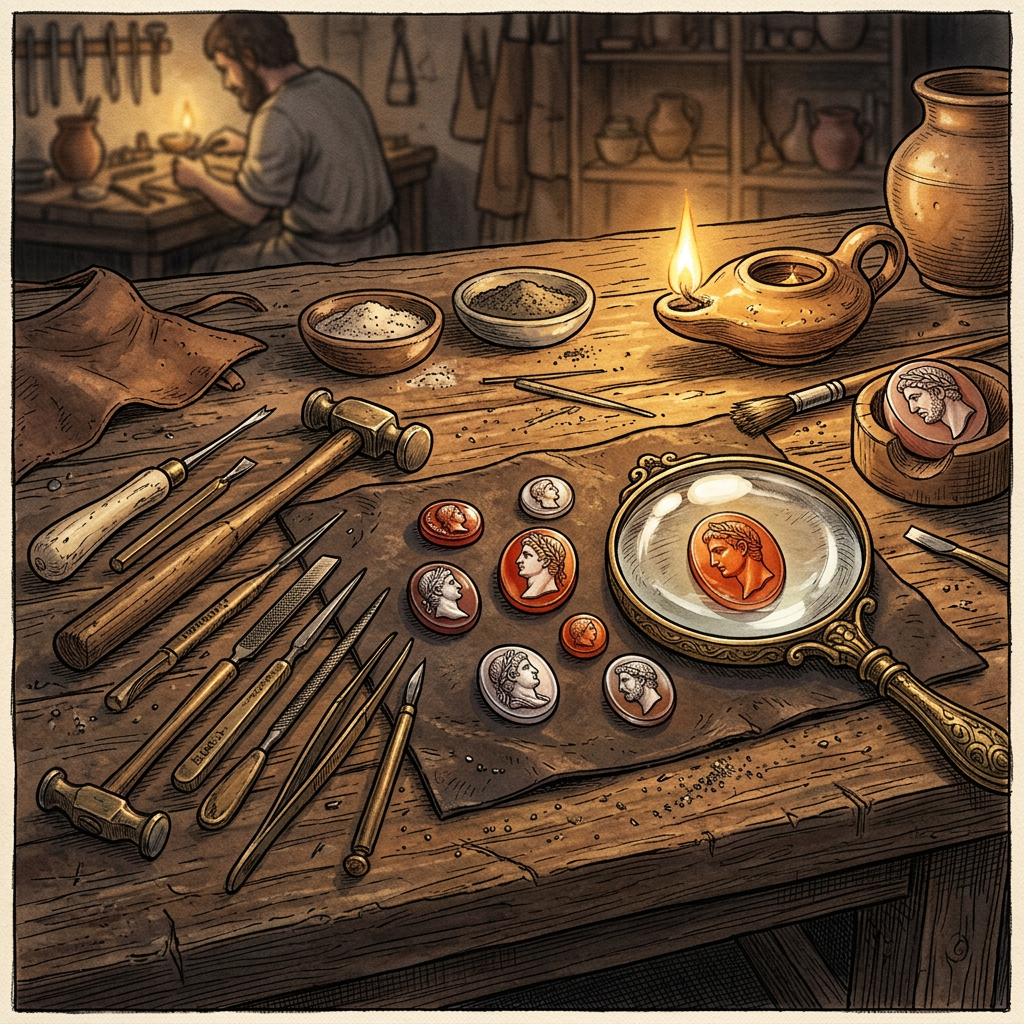
During urban expansion in Lyon, France, excavators discovered the remains of a 1st-century Roman Imperial Gem-Cutting Studio. The site yielded a rare collection of intact iron and bronze precision drills, magnifying lenses made of polished rock crystal, and dozens of unfinished intaglios featuring portraits of the Julio-Claudian emperors and mythological scenes.
The presence of rare raw materials like lapis lazuli and sapphire suggests that the studio was a high-status workshop catering to the Roman military elite and provincial governors. Analysis of the wear patterns on the tools indicates that the artisans used rotary lapidary wheels powered by foot-treadles, a level of technological sophistication that allowed for the creation of microscopic details in hard gemstones.