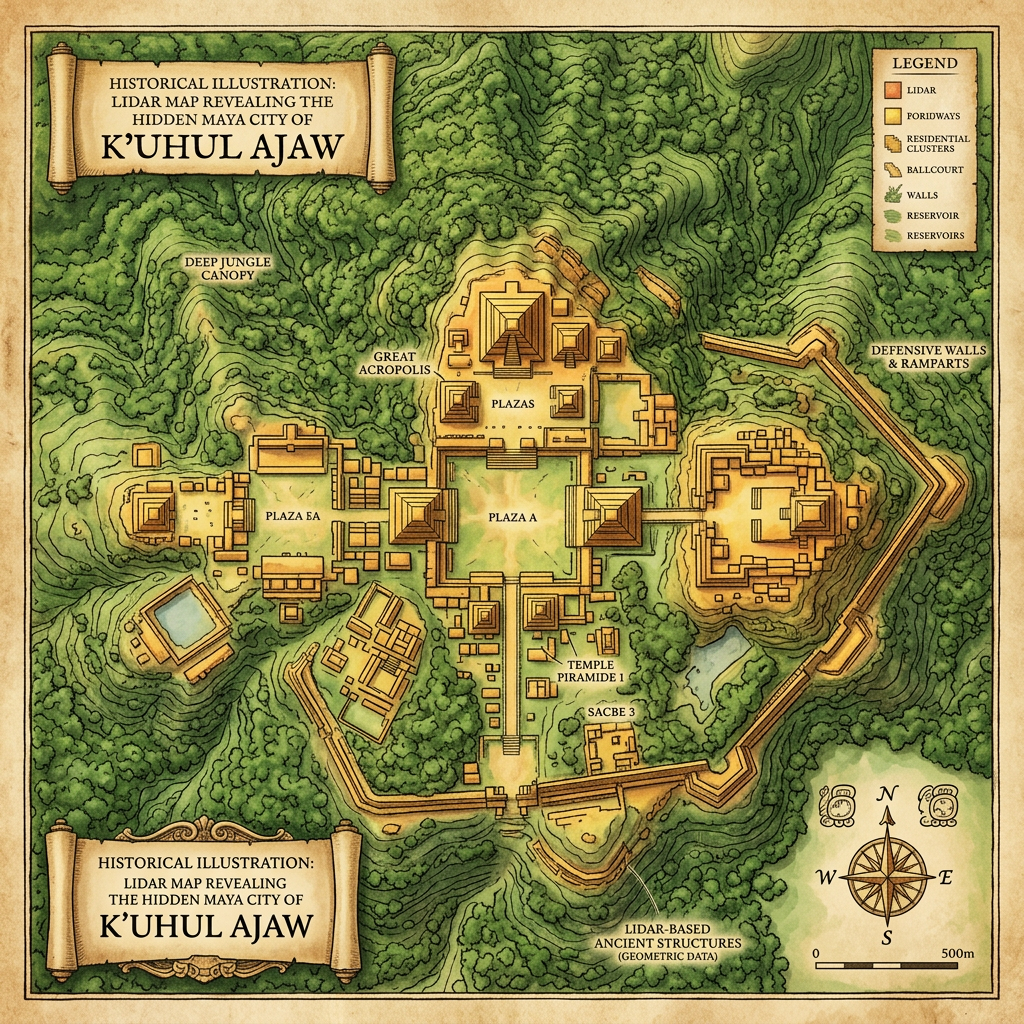
New LiDAR mapping in the remote northern Petén highlands of Guatemala has identified a massive 9th-century Maya Obsidian Reserve. The survey revealed a sprawling complex of fortified warehouses and specialized cutting stations located at a strategic mountain pass, suggesting a centralized state-controlled effort to monopolize the trade of volcanic glass during the late Classic period.
The data shows a dense network of defensive watchtowers surrounding the depot, indicating that obsidian was treated as a critical strategic resource comparable to modern energy reserves. This discovery challenges previous theories of decentralized Maya trade, proving that certain kingdoms maintained military-grade logistics hubs to safeguard their economic dominance against rising regional instabilities.