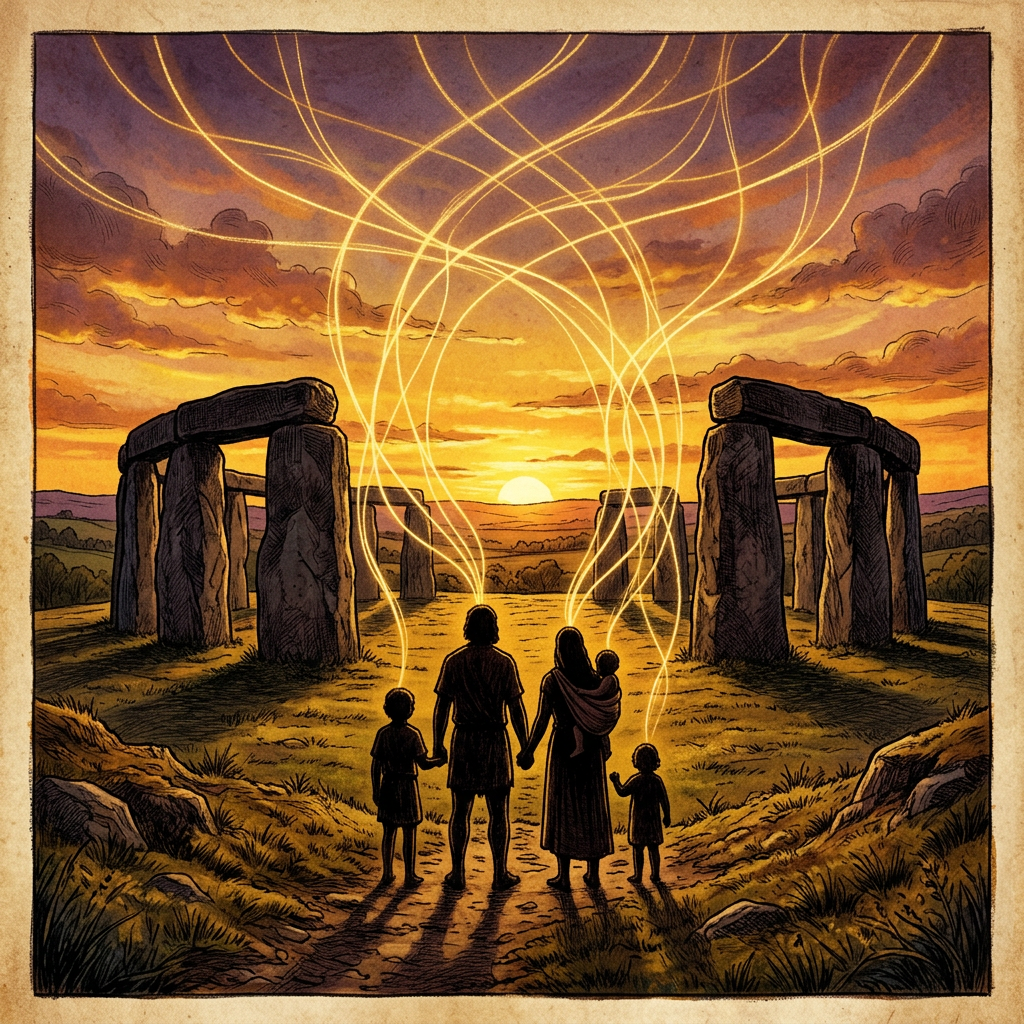
Published in the Proceedings of the National Academy of Sciences (PNAS), a massive genomic study of 80 individuals from Neolithic Orkney has mapped the social architecture of Britain's earliest farmers. The research utilized kinship analysis to show that large megalithic tombs were maintained by stable patrilineal lineages over more than 20 generations.
The study found that while males remained in their ancestral communities, females were frequently integrated from distant settlements, indicating a widespread network of exogamous marriage across the British Isles. This genetic continuity suggests that the construction of massive stone circles like the Ring of Brodgar was driven by long-standing familial dynasties rather than transient migratory groups.