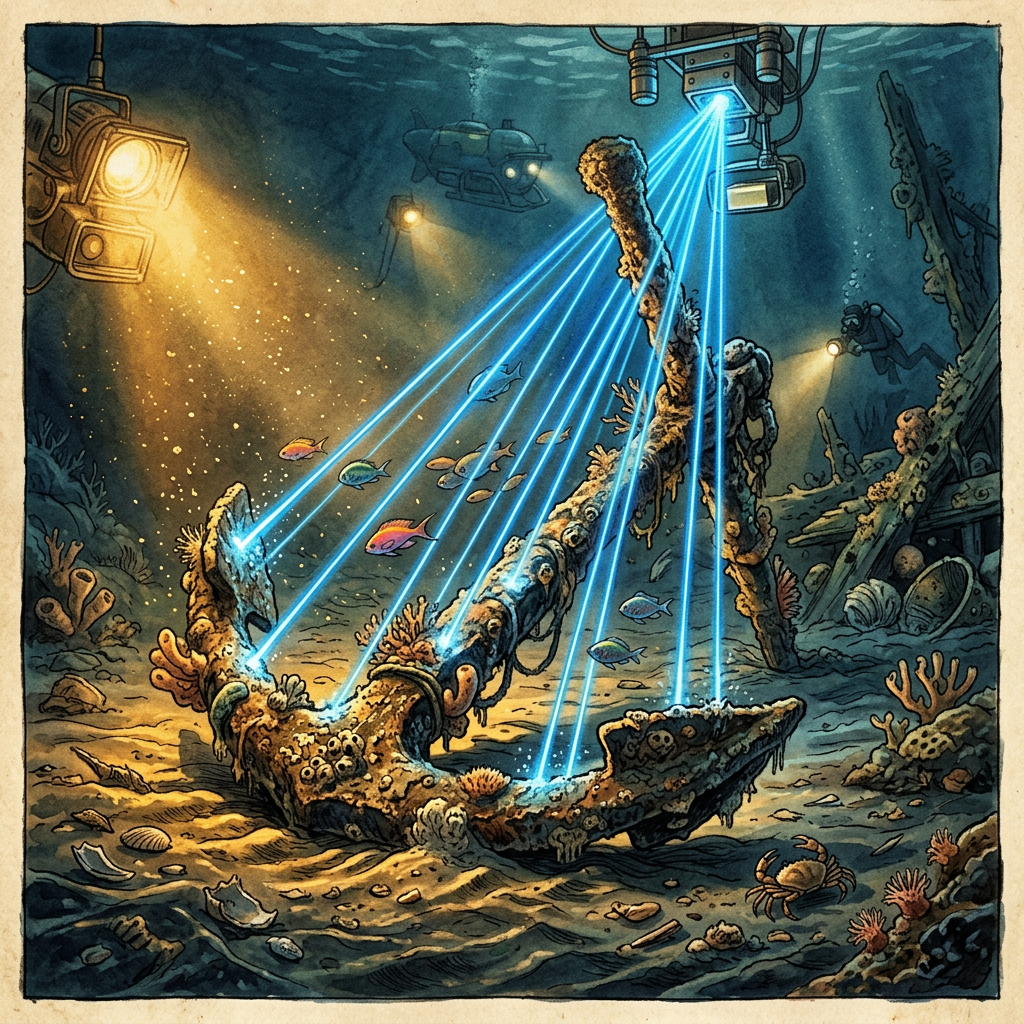
A new research paper in the Journal of Archaeological Science introduces Muon-Induced X-Ray Emission (MIXE), a non-destructive dating technique that allows for the analysis of artifacts encased in thick marine concretions. This methodology was applied to copper ingots and lead anchors recovered from submerged sites off the coast of Bet Dwarka, providing a refined chronological window of 1850–1700 BCE.
The MIXE analysis revealed specific isotopic signatures in the metal that link these maritime trade vessels directly to the Oman Peninsula and the Indus Valley. This technological leap provides archaeologists with a tool to date underwater heritage without the risk of damaging fragile organic materials often destroyed by traditional carbon-14 preparation methods.