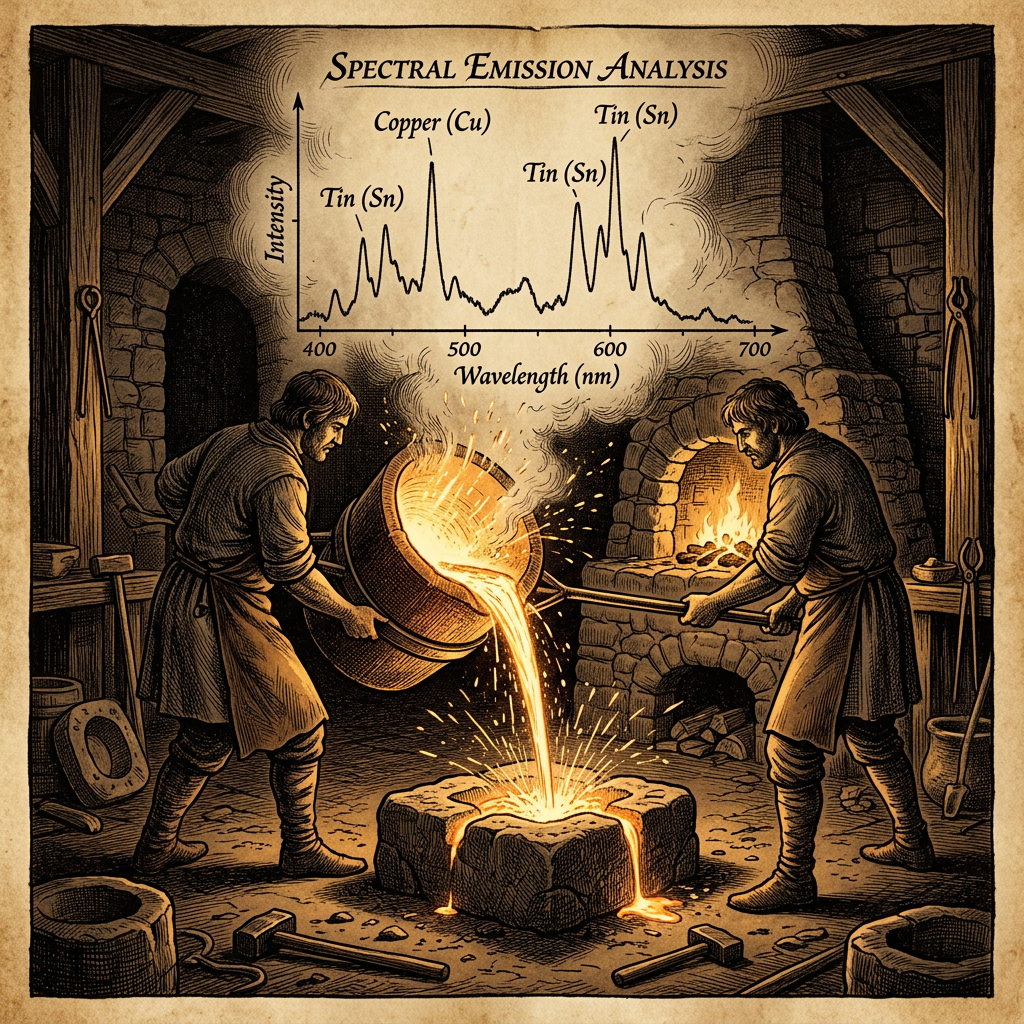
A research team specializing in archaeo-metallurgy has published a study in the Archaeo-Metallurgy Quarterly detailing the chemical composition of steel tools found at 4th-century BCE sites in the Godavari Valley. Using Laser-Induced Breakdown Spectroscopy (LIBS), they identified evidence of a sophisticated 'controlled-atmosphere' decarburization process.
The analysis shows that ancient smiths were able to precisely manipulate carbon levels to create a core of soft, ductile iron encased in a high-carbon steel shell—a precursor to case-hardening. This study provides scientific validation for descriptions of high-quality 'Indian Iron' found in early Greek and Persian texts, confirming the advanced state of chemical engineering in the pre-Mauryan era.