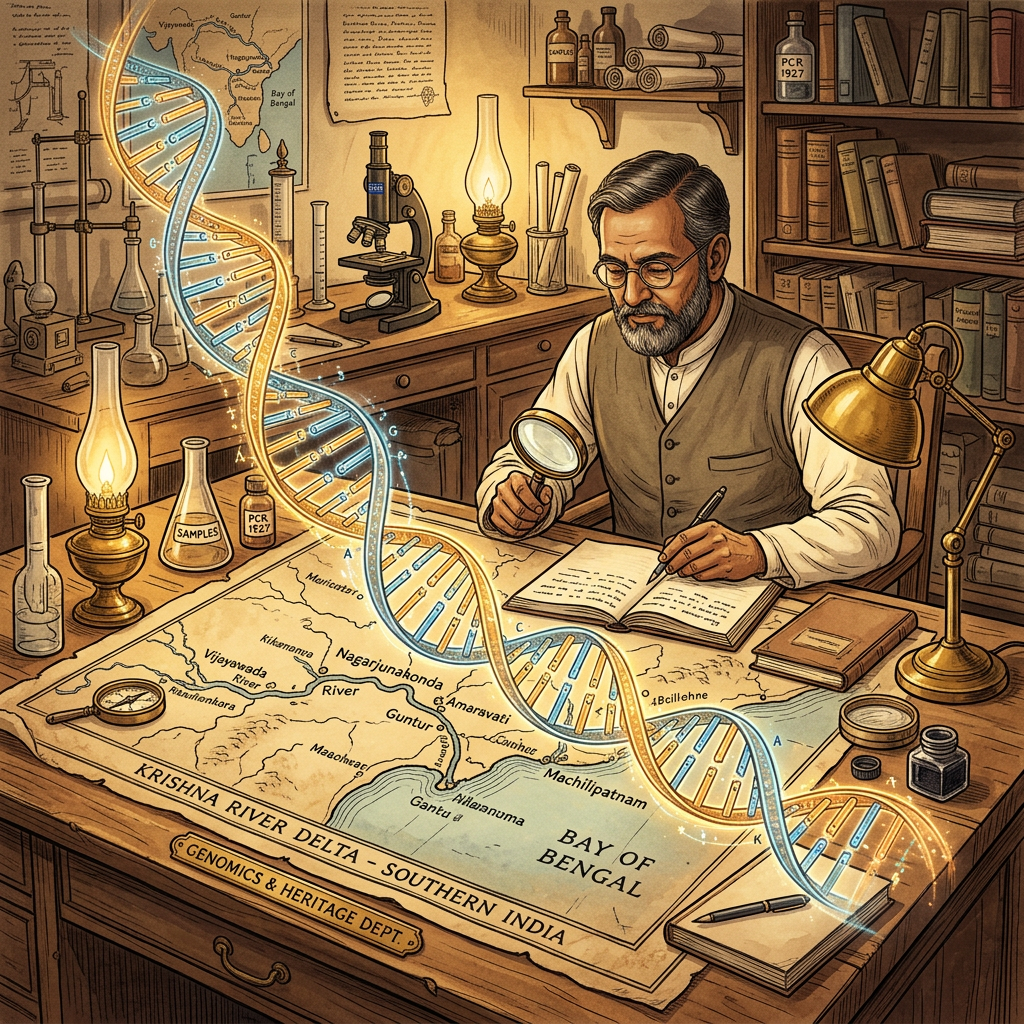
A breakthrough paleogenomic study published in Nature Genetics has analyzed the remains of individuals from the Krishna River Valley dating back to 3500 BCE. The research identifies the earliest known presence of specific genetic variants, including a unique G6PD deficiency marker, which provided a survival advantage against endemic malaria. This suggests that the expansion of early agricultural communities into the humid river basins of Southern India triggered a rapid evolutionary response to mosquito-borne pathogens.
The study, led by an international consortium of geneticists and anthropologists, utilizes high-coverage shotgun sequencing to map the transition from hunter-gatherer to sedentary farming lifestyles. The data reveals that these early inhabitants possessed a distinct genetic signature that differentiates them from contemporary populations in the Indus Valley, pointing to a localized surge in adaptive mutations driven by the specific ecological pressures of the Deccan plateau's riverine systems.