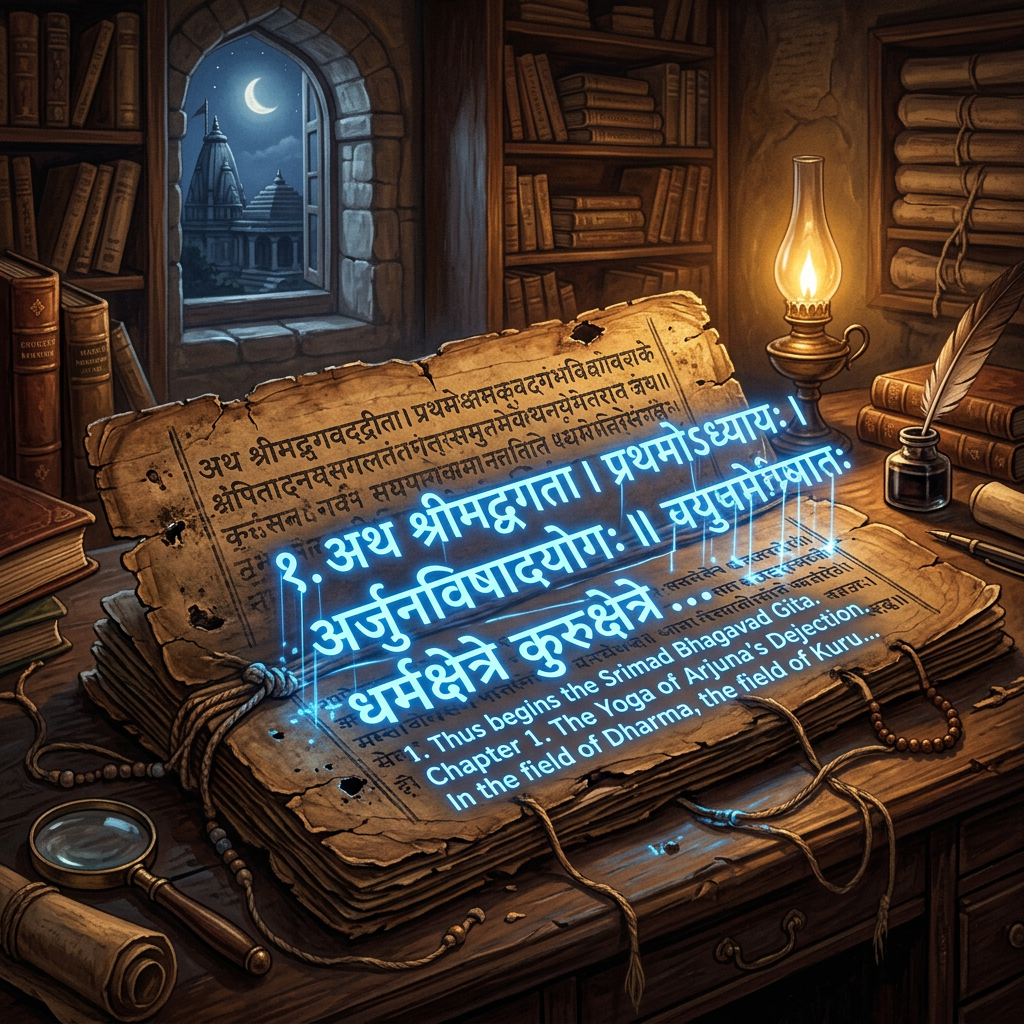
Researchers at the Institute of Ancient Manuscripts have utilized advanced AI-driven multispectral imaging to recover text from a 7th-century palimpsest found in a remote monastic archive. The underlying script, identified as Siddham, contains a previously unknown Sanskrit treatise titled Bhumi-Vigyan, which details sophisticated protocols for soil classification, nutrient management, and the use of organic composts to enhance crop yields.
The text describes recursive methods for testing soil salinity and moisture retention, suggesting that ancient Indian agronomists possessed a deep understanding of pedology long before the modern era. Scholars believe this discovery provides the missing link between the agricultural descriptions in the Vedas and the highly developed irrigation systems found in the medieval Chola and Vijayanagara empires.