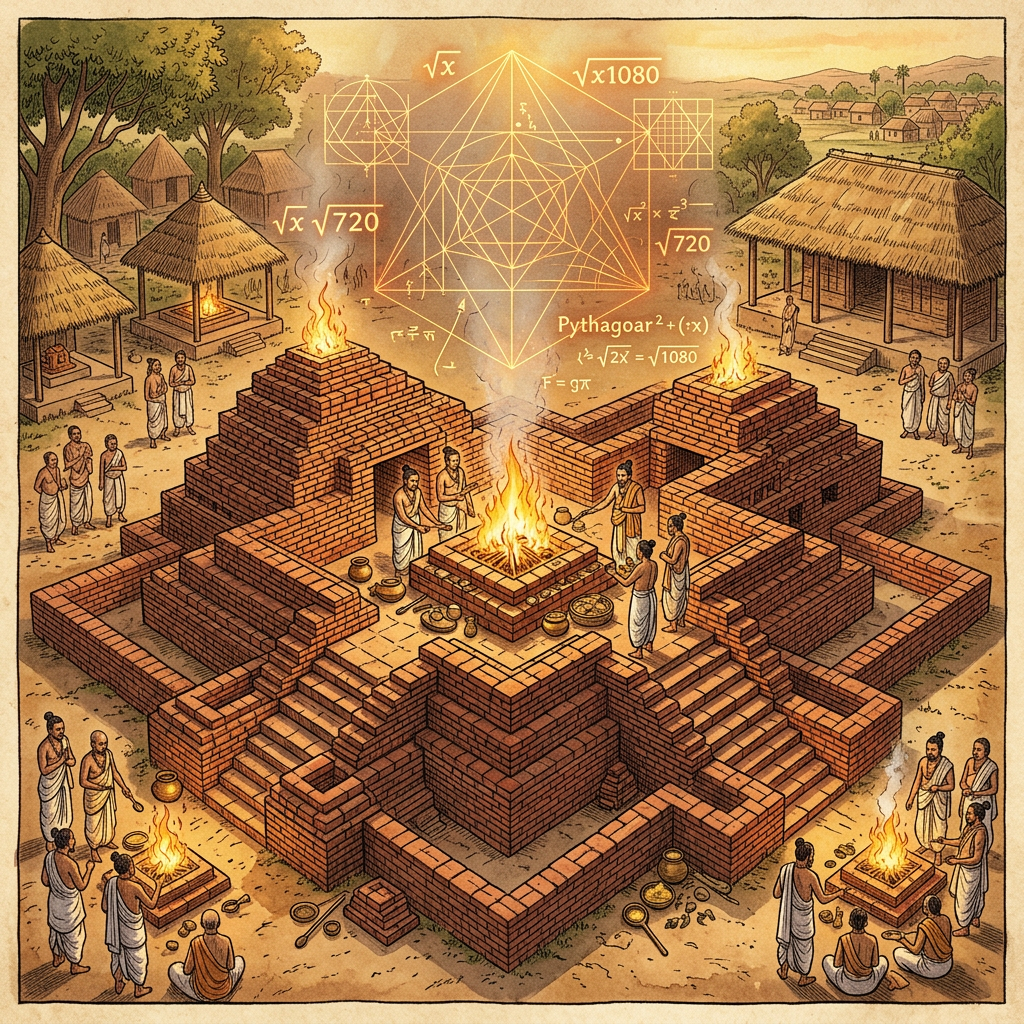
A new mathematical study published in the Archive for History of Exact Sciences has used computational modeling to re-evaluate the geometric constructions described in the Apastamba Sulba Sutra. The research demonstrates that the ritual altar designs were based on advanced recursive algorithms for calculating the square root of two and other irrational numbers with a precision of five decimal places, predating similar European methodologies by over a millennium.
The study highlights how the 'Circle-Squaring' rituals were not merely symbolic but were rigorous mathematical exercises designed to maintain constant areas across complex polygonal shifts. This findings suggest that Vedic mathematics utilized a systematic approach to infinite series and approximation that was integrated into the architectural and ritualistic fabric of early Iron Age India.