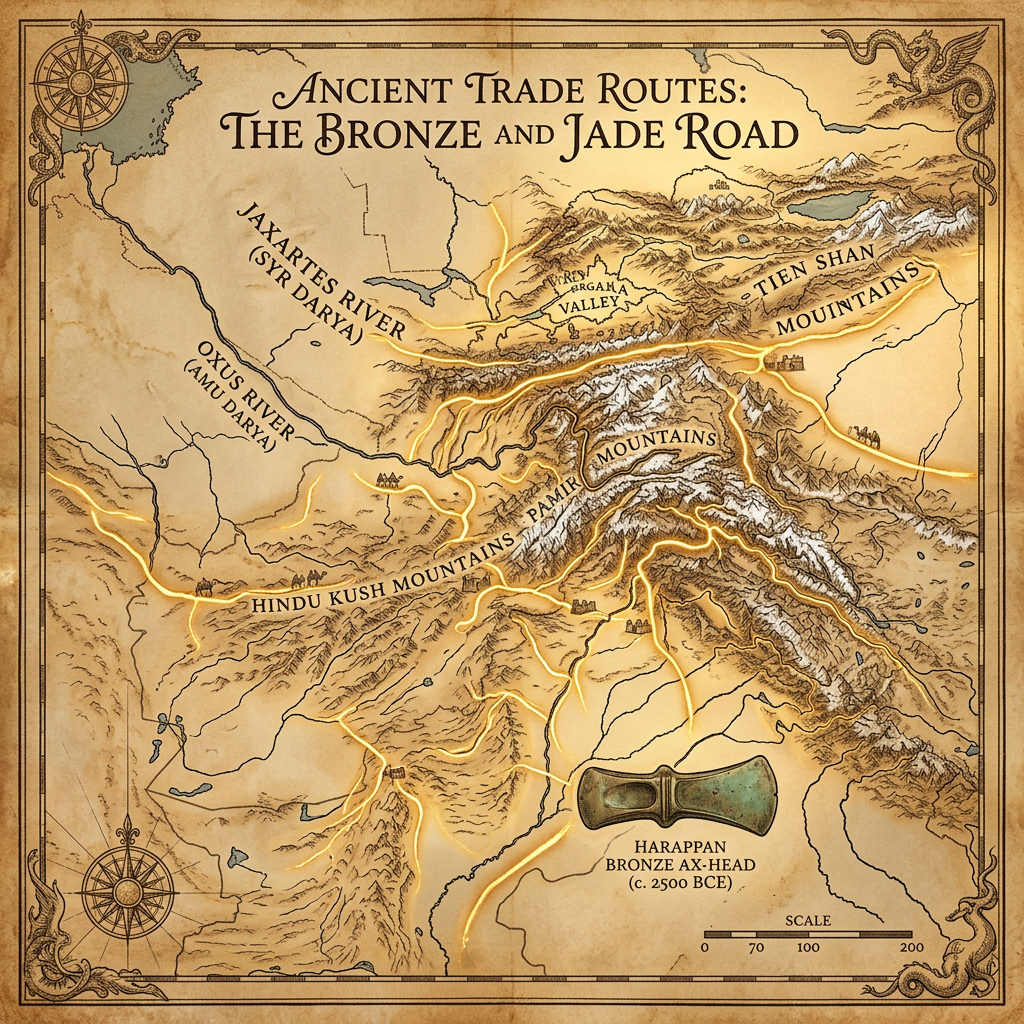
Scientific analysis of bronze artifacts from mature Harappan sites has utilized high-precision Lead Isotope Fingerprinting to trace the origin of their tin content. The results, published in the Journal of Archaeological Science, provide the first conclusive evidence that the Indus Valley craftsmen were sourcing tin directly from the Fergana Valley in modern-day Uzbekistan and Tajikistan as early as 2200 BCE.
This findings map out a vast, organized trade corridor that spanned over 2,000 kilometers, connecting the urban centers of the Indus with the mineral-rich steppes of Central Asia. The study suggests that the Harappans maintained sophisticated logistical networks and diplomatic ties with northern tribes to secure the critical components for their bronze-age industries, highlighting the globalized nature of ancient commerce.