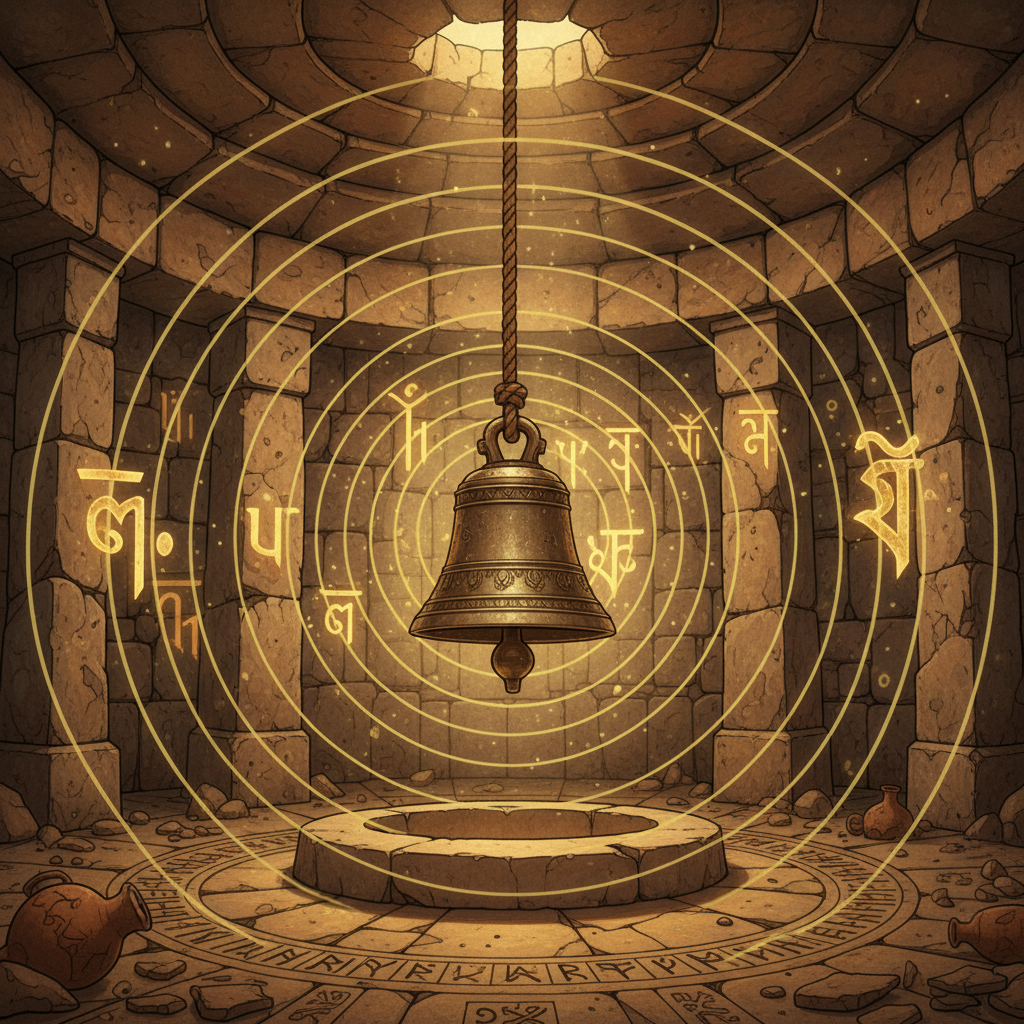
Researchers at the Computational Linguistics Center have announced the successful decipherment of a rare set of 8th-century Sharada script manuscripts discovered in the upper reaches of the Jhelum valley. The texts, which had remained unreadable for decades due to severe degradation, contain advanced theoretical discussions on the physics of sound, specifically focusing on the phenomenon of diffraction and the way sound waves interact with architectural surfaces.
The treatises describe experiments with varying shapes of stone and hollow vessels to amplify or dampen sound, providing a theoretical framework for the acoustic marvels found in medieval temples. By using AI to reconstruct the missing characters, the team identified technical terms that correspond to modern wave mechanics. This breakthrough suggests that ancient Indian scientists had developed a systematic empirical approach to acoustics, moving beyond ritualistic applications to a formal study of physical properties.