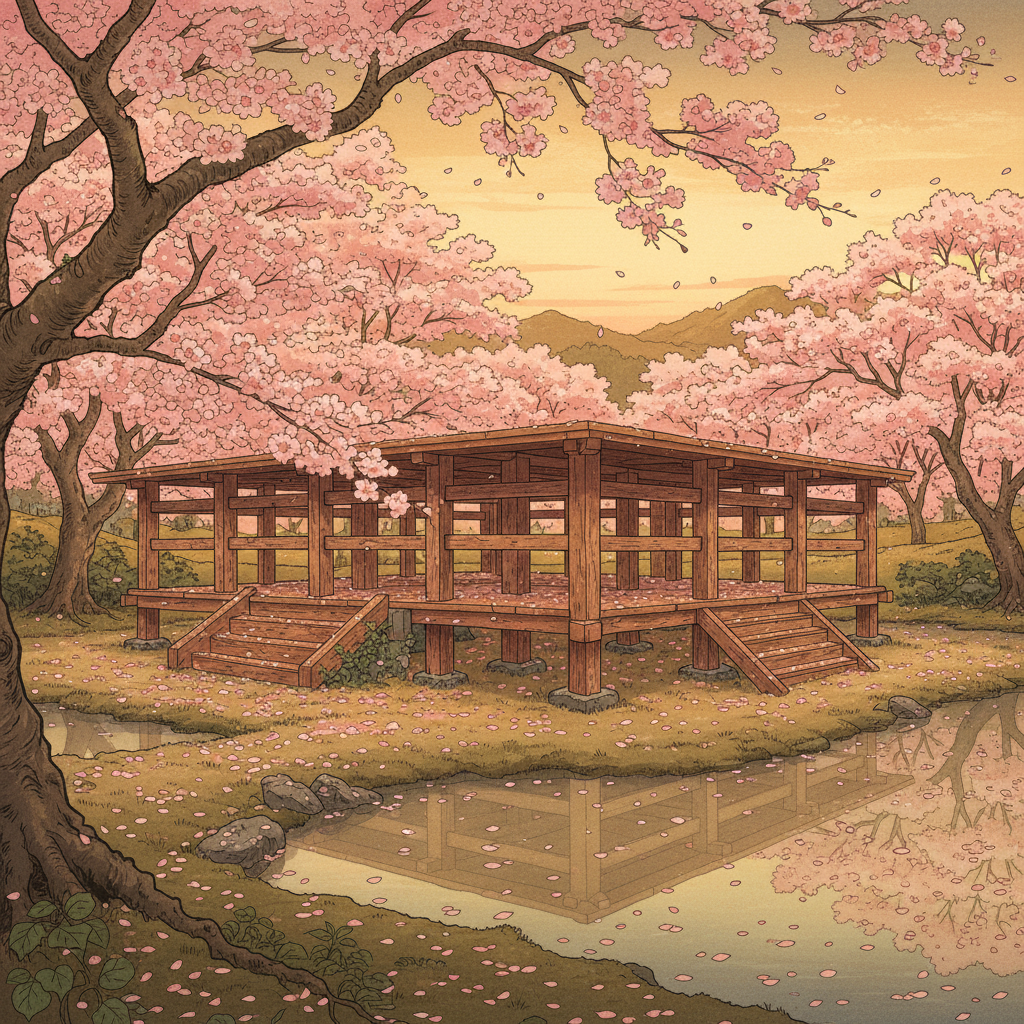
Ongoing restoration work at a secluded temple site in Kyoto has uncovered the foundations of timber pavilions specifically designed for Hanami (flower viewing) in the 10th century. Excavated layers revealed fragments of lacquered picnic sets and ceramic inkstones used by courtly nobles to compose poetry during the spring bloom.
Soil analysis identified a high concentration of ancient cherry pollen, confirming that these structures were situated within managed orchards intended for ritual recreation. The find documents the formalization of cherry blossom viewing from a religious agricultural rite into a sophisticated cultural festival.