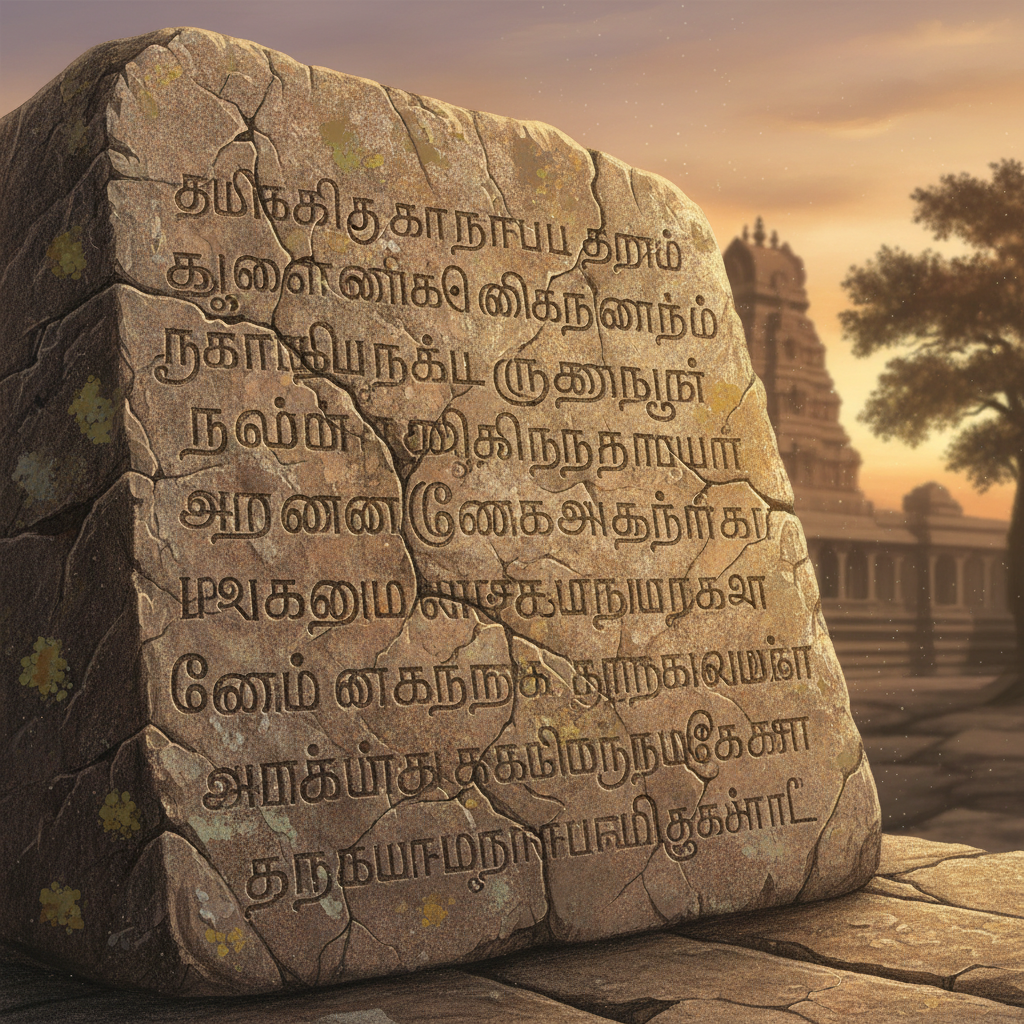
Recent excavations near the Vaikuntha Perumal Temple in Kanchipuram have brought to light a series of 9th-century Pallava inscriptions detailing the 'Niti-Ghatika'. This previously unknown ethical code served as the foundational 'philosophy of the assembly,' guiding the ghatikas (learning centers) on how to conduct public debates and reach consensus through 'Sama-Yukti' (balanced reasoning).
The inscriptions suggest that the Pallava kings viewed governance not as absolute rule, but as a philosophical exercise in maintaining social equilibrium. The text explicitly mentions the duty of the ruler to protect the 'intellectual sovereignty' of the people, marking a significant early instance of democratic ethics within a monarchical system. Epigraphists believe these findings will reshape our understanding of political philosophy in medieval South India.