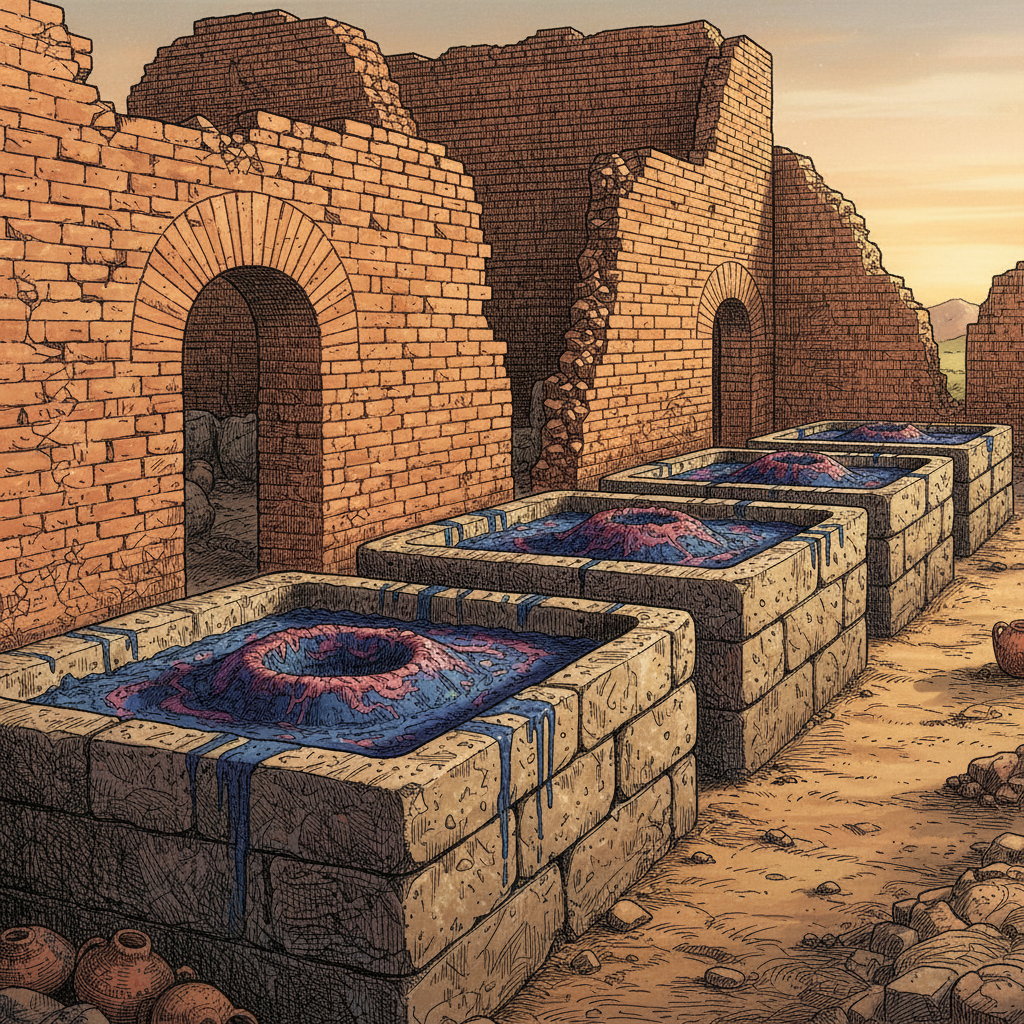
Excavations at the Mahanadi riverbank have unearthed the remains of an extensive silk-processing center dating to the Mauryan Empire. The site features a series of interconnected stone vats with traces of organic dyes, as well as unique terracotta spindle whorls and bone needles used in the production of high-grade textiles.
Chemical analysis of the sediment inside the vats has confirmed the use of madder root and indigo, suggesting a vibrant textile industry that catered to the imperial elite. This find reinforces the importance of eastern India as a major industrial hub during the reign of Ashoka the Great, bridging the gap between inland production and the burgeoning maritime trade routes of the Bay of Bengal.