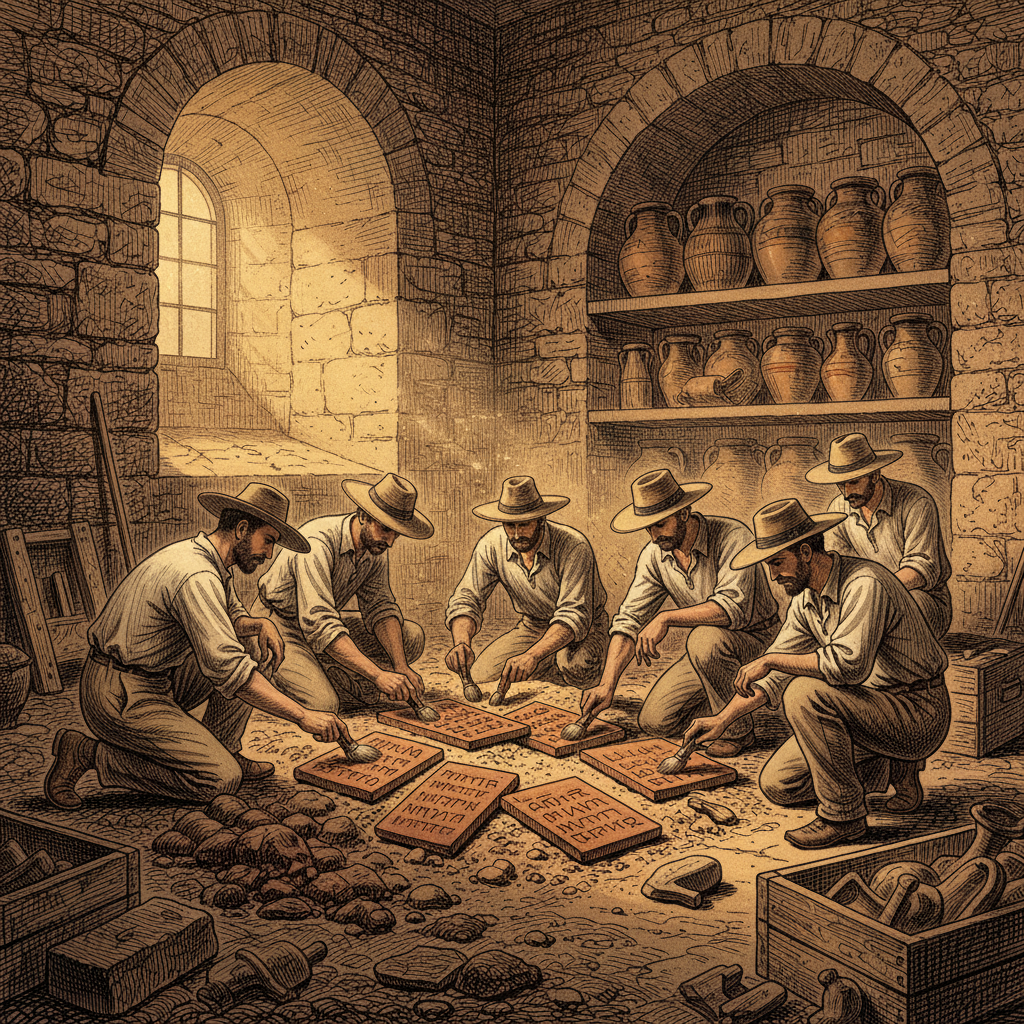
Excavations at the outskirts of the Phaistos site have revealed a massive, previously unknown administrative wing of a Minoan palace. The structure, dating to the Neopalatial period (c. 1500 BCE), features monumental ashlar masonry and a series of storage magazines filled with large pithoi jars once used for storing olive oil and grain.
The most significant find is a collection of Linear A clay tablets, which appear to record the distribution of rations to specialized craftsmen. This discovery is expected to provide critical data for linguistic researchers attempting to decipher the undeciphered Minoan script, while shedding new light on the bureaucratic organization of the Bronze Age Aegean civilizations.