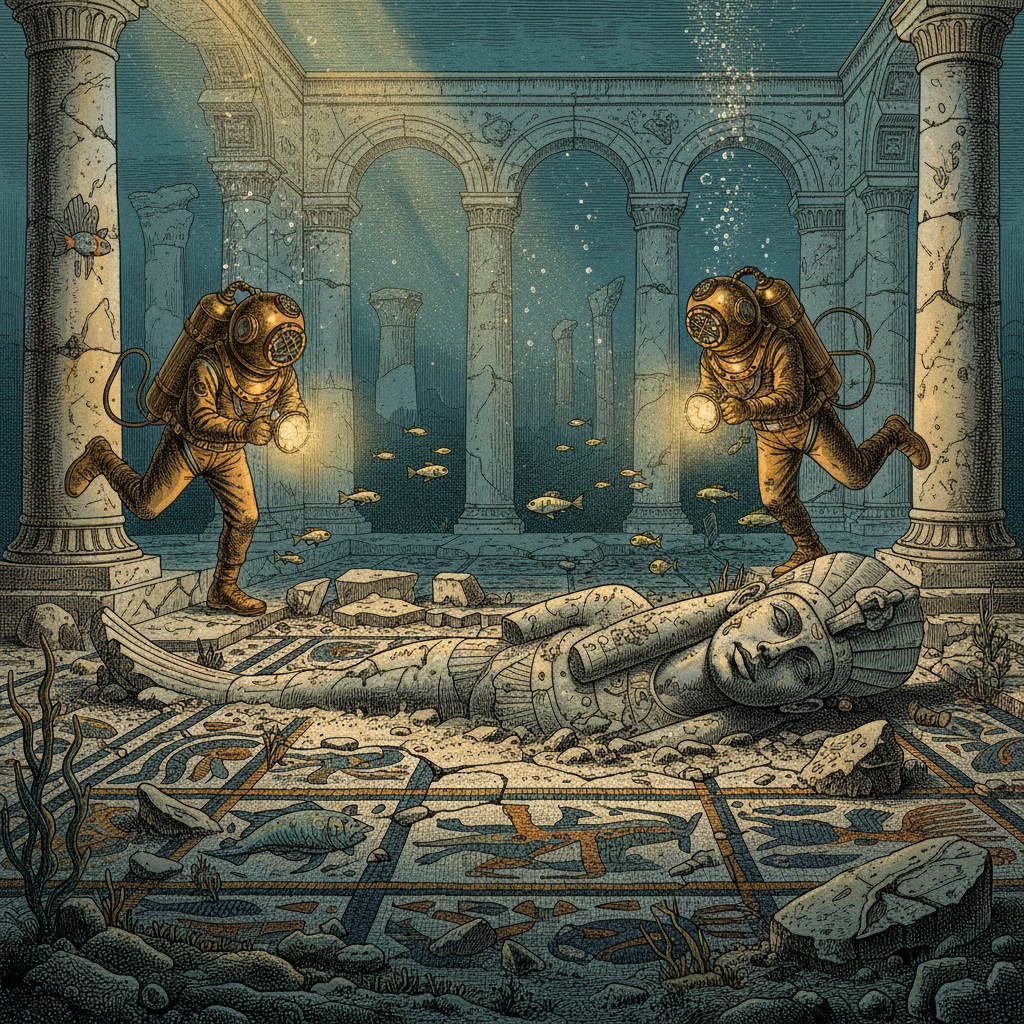
Marine archaeologists working in the Bay of Aboukir off the coast of Alexandria have announced the discovery of an exceptionally well-preserved Sanctuary of Isis. Located within the submerged ruins of the ancient city of Canopus, the temple dates back to the early Ptolemaic period (3rd century BCE). The excavation team discovered marble statues of the goddess, bronze ritual vessels, and several limestone sphinxes that originally lined the entrance to the inner sanctuary.
The find is significant because it provides new data on the syncretism of Egyptian and Greek religious practices during the Hellenistic era. The temple's floor is paved with intricate mosaics that remain remarkably clear despite being underwater for over a millennium. Researchers plan to use 3D photogrammetry to create a digital walk-through of the temple, while the artifacts are being carefully raised for desalination and eventual display at the Grand Egyptian Museum.