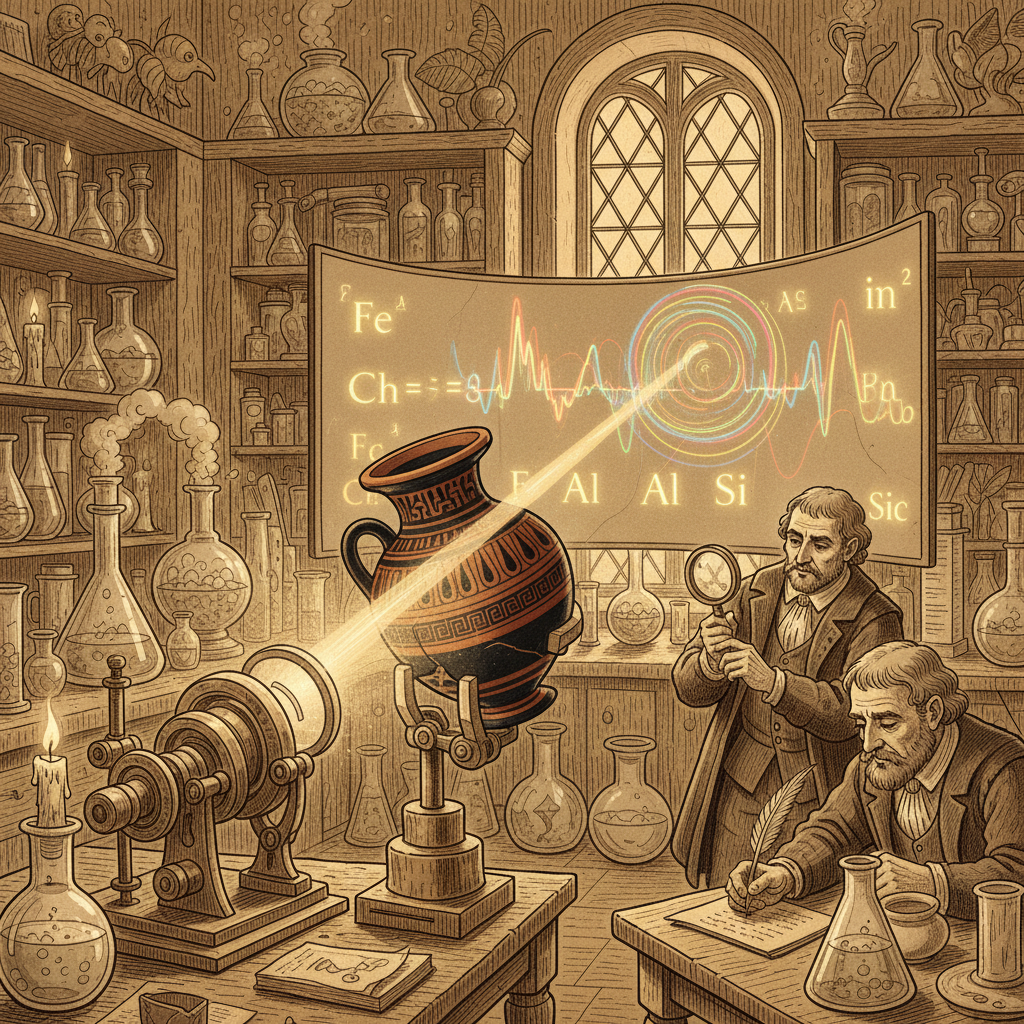
Chemical analysis of pottery shards excavated from Keeladi in Tamil Nadu has revealed a sophisticated industrial process for high-temperature waterproofing. Using Laser-Induced Breakdown Spectroscopy (LIBS), researchers identified the specific use of localized silica and iron-rich mineral additives that allowed the clay to vitrify at temperatures exceeding 1,200 degrees Celsius.
This research confirms that the Early Iron Age communities of the Vaigai River valley had achieved a level of chemical engineering comparable to much later periods. The study highlights the existence of specialized artisan guilds that traded these high-durability ceramics across the Indian Ocean, facilitating long-distance maritime exchange.