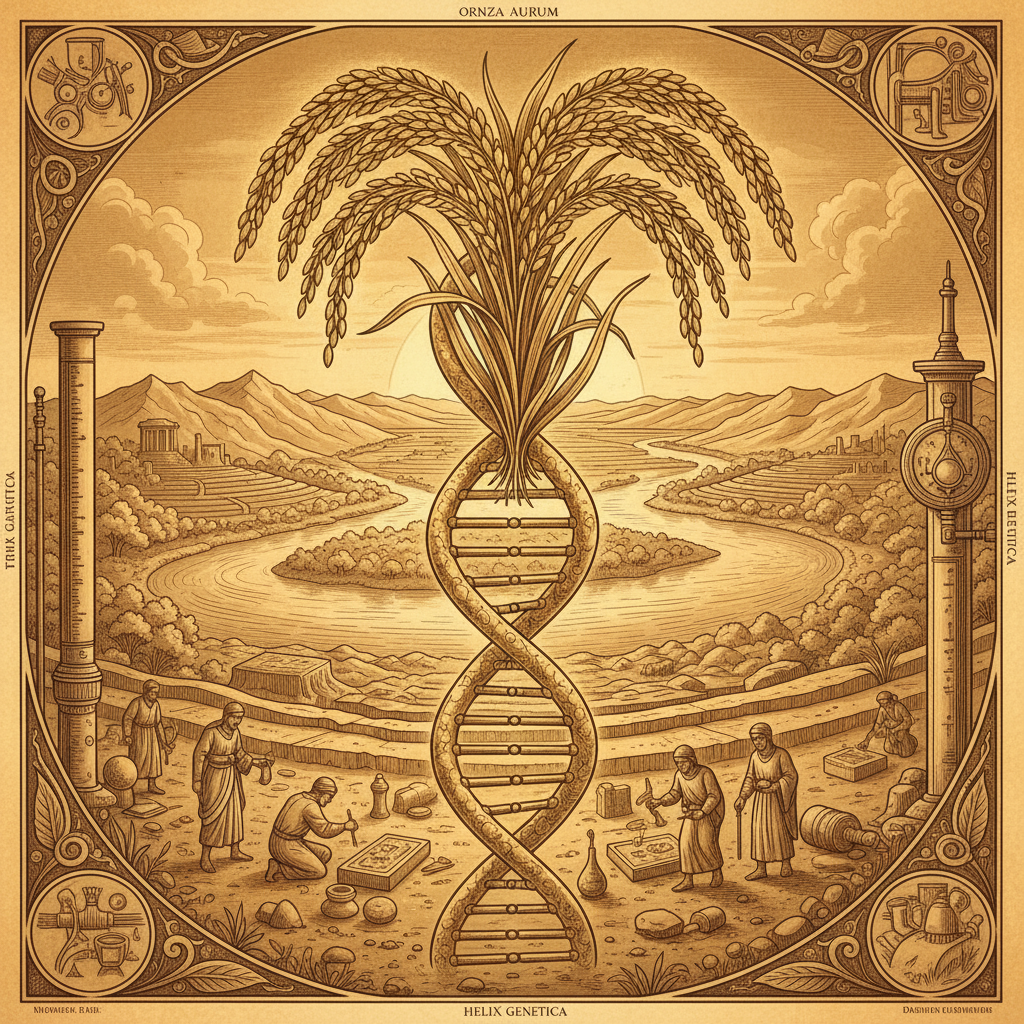
A groundbreaking paleogenomic analysis of skeletal remains unearthed in the Son Valley of Madhya Pradesh has identified the earliest known genetic markers for rice-gluten tolerance. The study, conducted by the International Institute of Anthropological Genomics, involved the sequencing of four individuals dating back to approximately 2500 BCE, revealing a unique evolutionary adaptation specifically linked to the long-term consumption of indigenous wild rice strains.
These findings provide critical evidence for the independent domestication of rice in the Ganges-Son confluence region, challenging the traditional theory of a single origin point in East Asia. The research also suggests that these ancient populations possessed a distinct genetic signature that correlates with modern communities in the region, providing a 4,500-year link of dietary and genetic continuity in Central India.