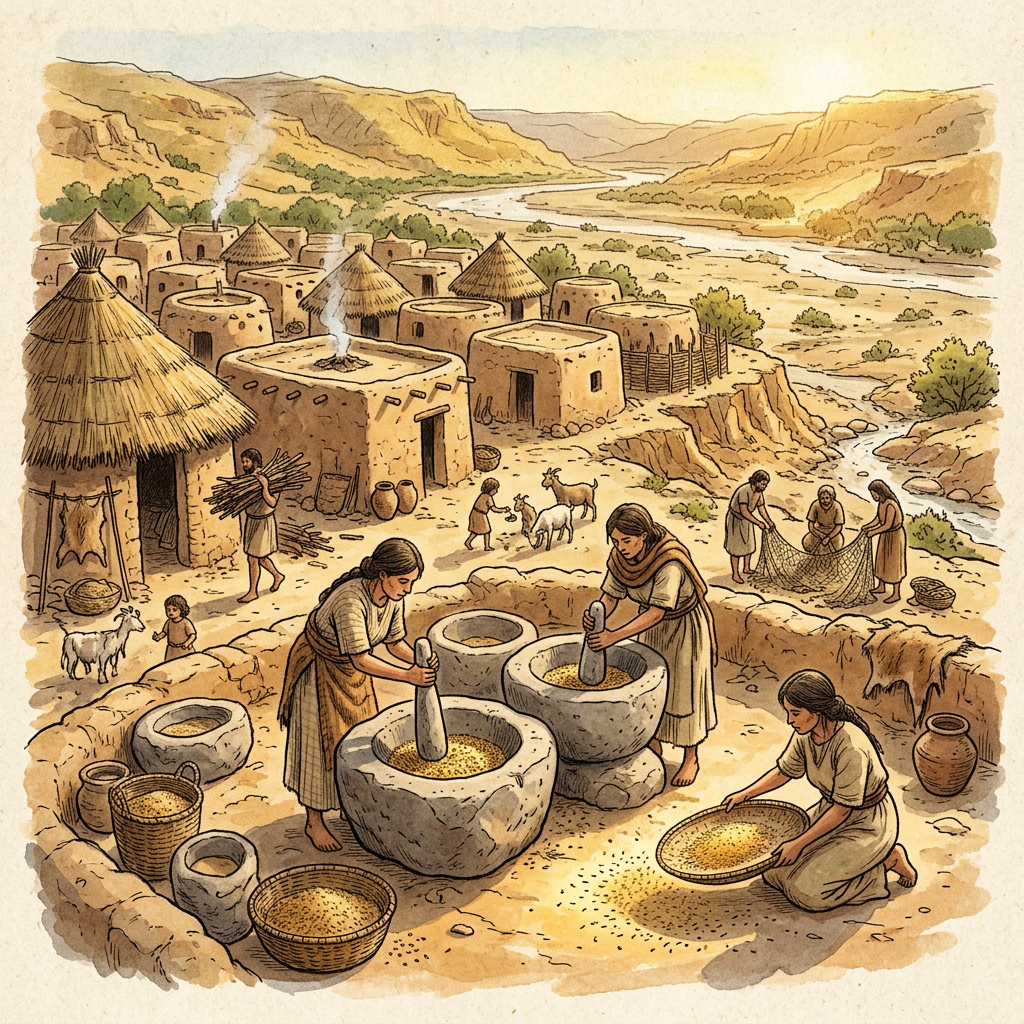
A new paleogenetic study focused on the Tapti River valley in Central India has uncovered a major genetic shift occurring approximately 6,000 years ago. Analysis of skeletal remains indicates the arrival of a distinct population lineage that brought with it the genetic adaptations necessary for the consumption and processing of drought-resistant small millets.
This genomic transition correlates with a period of increased regional aridity, suggesting that ancient populations actively selected for traits that enabled survival during prolonged dry spells. The study concludes that the diversification of Indian agriculture was driven by a complex interplay between climatic stress and genomic adaptation in the early Neolithic era.