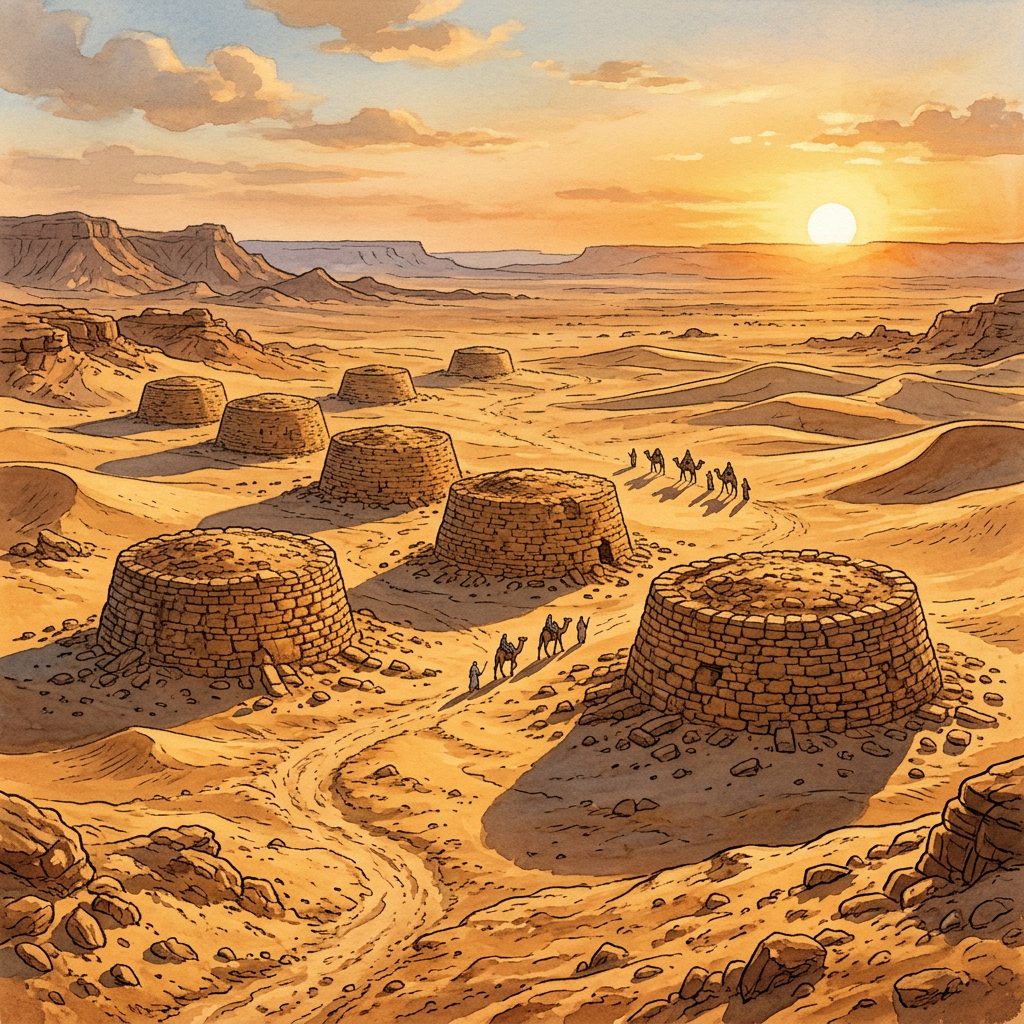
Satellite imagery combined with ground surveys in northern Mali has identified a series of concentric stone mounds located along ancient dried-up riverbeds. Excavations revealed that these mounds were not tombs, but ceremonial platforms used for salt-blessing festivals by prehistoric pastoralists. The site yielded thousands of miniature clay cattle and decorated salt-scraping tools, suggesting a festival tradition that linked the survival of herds to the sacred commodity of salt.
These 'Salt Mounds' indicate that the origins of the famous Saharan trade festivals date back much earlier than previously thought. The ritual geometry of the mounds aligns with the rising of Sirius, indicating that the festivals were timed to coordinate the seasonal movement of thousands of people and their livestock across the desert.