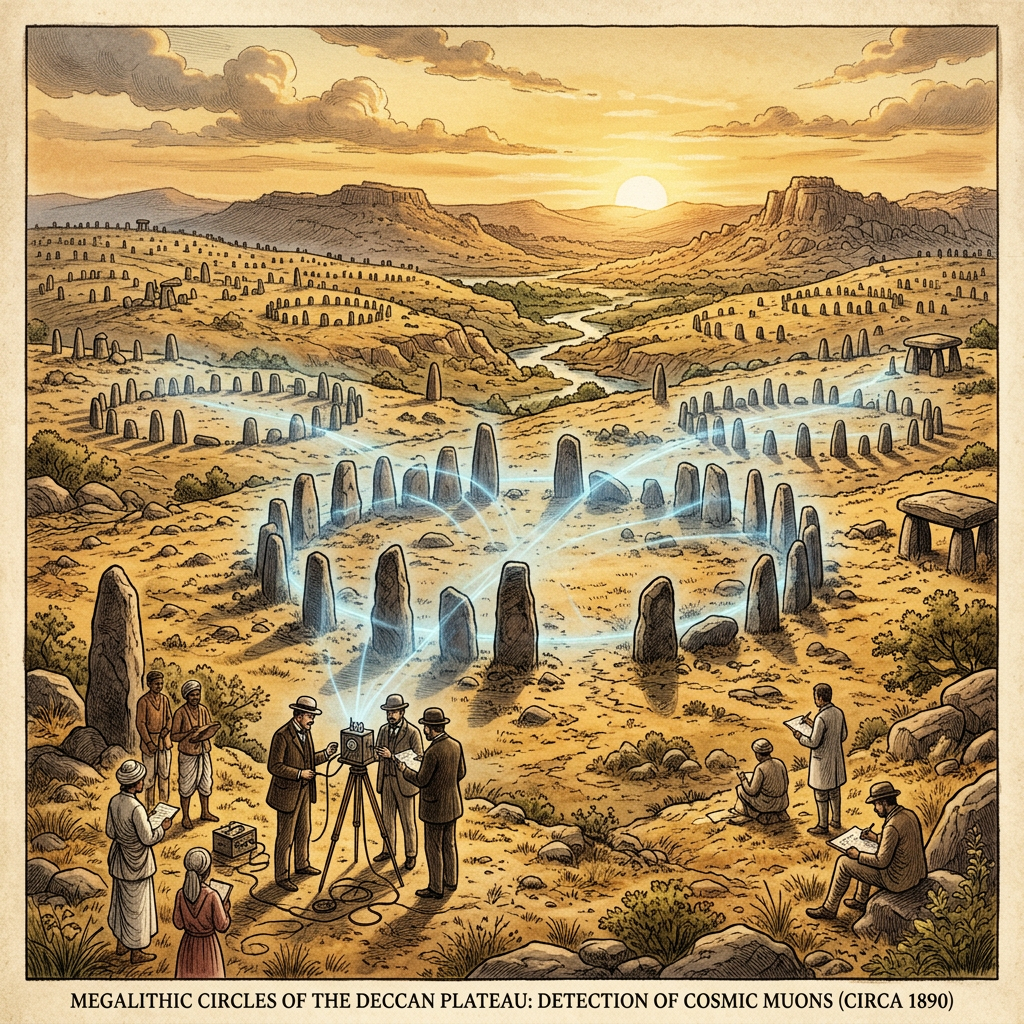
Archaeometric researchers have announced a major advancement in dating techniques with the application of Muon-Induced Argon-39 (Ar-39) dating to megalithic burial sites in the Deccan Plateau. Published in the Archaeological Science Review, the study utilized this new methodology to provide high-precision absolute dates for stone circles previously considered difficult to categorize. The results push back the construction of several major sites to the 15th Century BCE, establishing a much earlier start for the Iron Age in Southern India than previously accepted.
Unlike traditional carbon-14 dating, which relies on organic remains that are often missing or contaminated in burial mounds, Ar-39 dating analyzes the cosmic ray exposure of the megalithic stones themselves. This non-destructive technique provides a direct timeline of when the stones were quarried and placed. The refined chronology suggests that the transition from late Neolithic to Iron Age megalithic cultures was a rapid, technologically driven shift associated with new metal-working hubs in the Godavari basin.