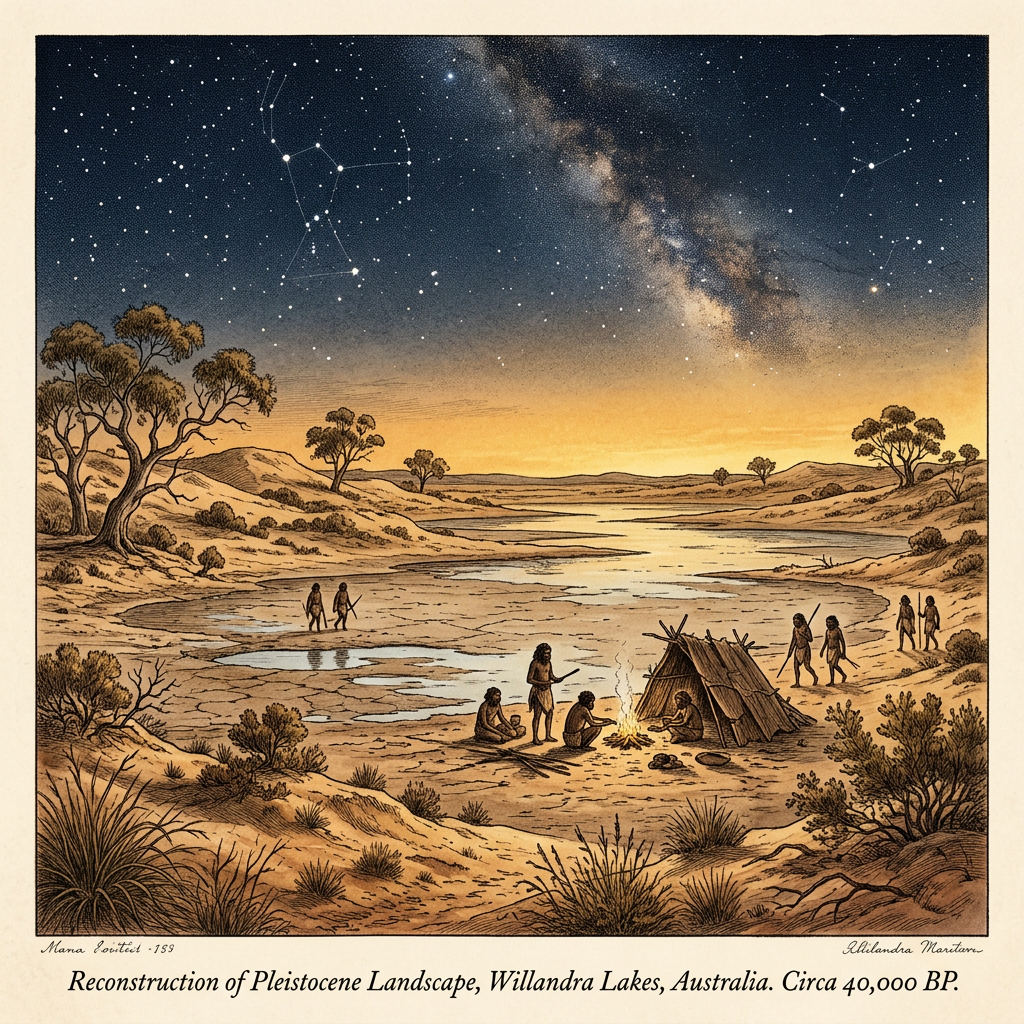
A groundbreaking paleogenomic study published in Nature Genetics has successfully sequenced the DNA of remains found in the Willandra Lakes Region of Australia, dating back approximately 13,000 years. The research identifies a previously unknown 'ghost lineage' of Pleistocene hunter-gatherers that diverged from other Sahulian populations much earlier than previously hypothesized. This genetic signature suggests that early human groups in Australia remained significantly more isolated in specific ecological niches than the current 'single-wave' migration model accounts for.
The study, led by an international team of geneticists and indigenous heritage consultants, utilized advanced high-coverage shotgun sequencing to overcome the degradation of DNA in arid environments. The results indicate that this specific lineage possessed unique genetic markers associated with metabolic adaptations to high-calcium water sources and extreme temperature fluctuations. These findings provide critical evidence for the complexity of human colonization across the Australian continent during the terminal Pleistocene, highlighting a deep history of regional continuity and adaptation.