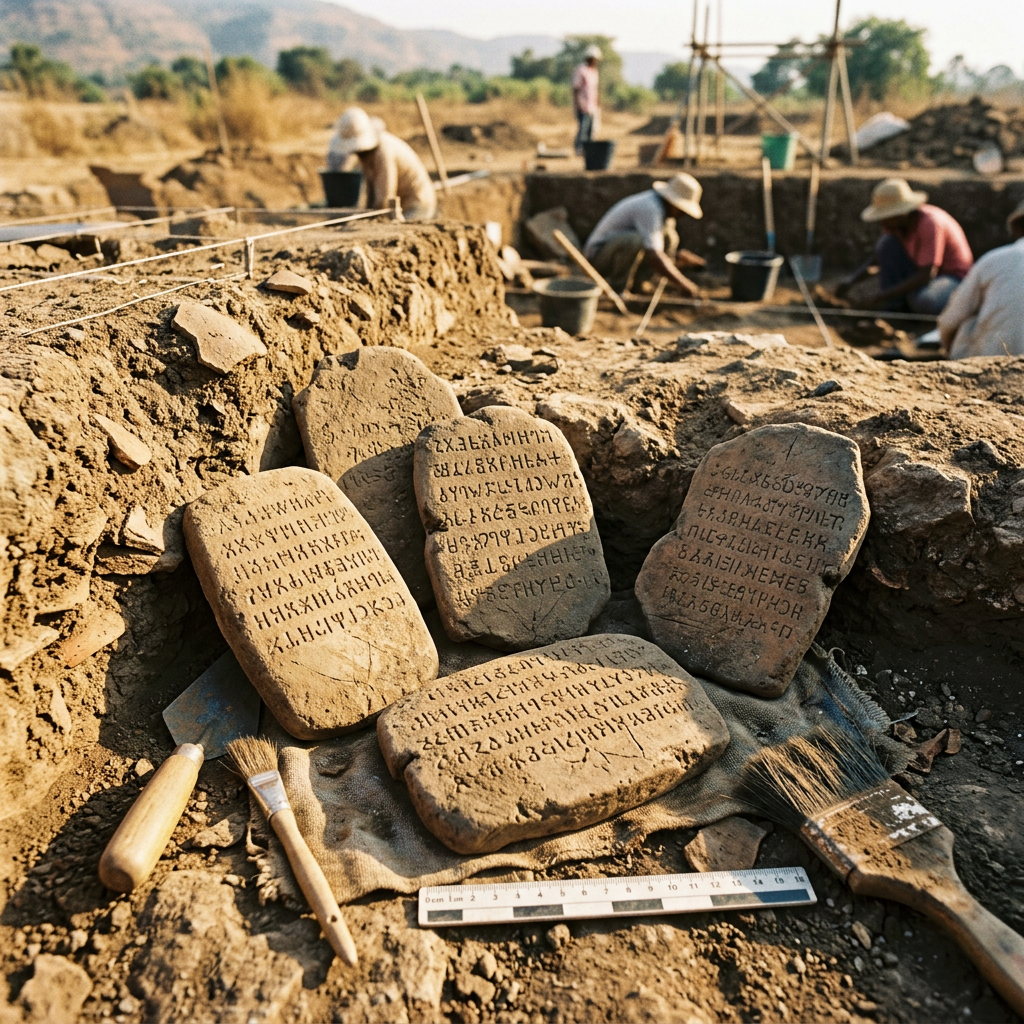
Recent excavations at the historic site of Sopara, near Mumbai, have yielded a cache of clay tablets inscribed with Brahmi script. Dating to approximately the 4th century BCE, the texts focus on 'Artha-Dharma', a school of thought that attempted to reconcile material pursuit with moral obligation. This 'Philosophy of Equitable Wealth' provides early guidelines for merchants and rulers.
The tablets describe the concept of 'Samatva-Labha'—the idea that profit is only valid if it sustains the social fabric. This archaeological find predates several known economic treatises and offers a glimpse into the ethical debates of the pre-Mauryan era in maritime India.