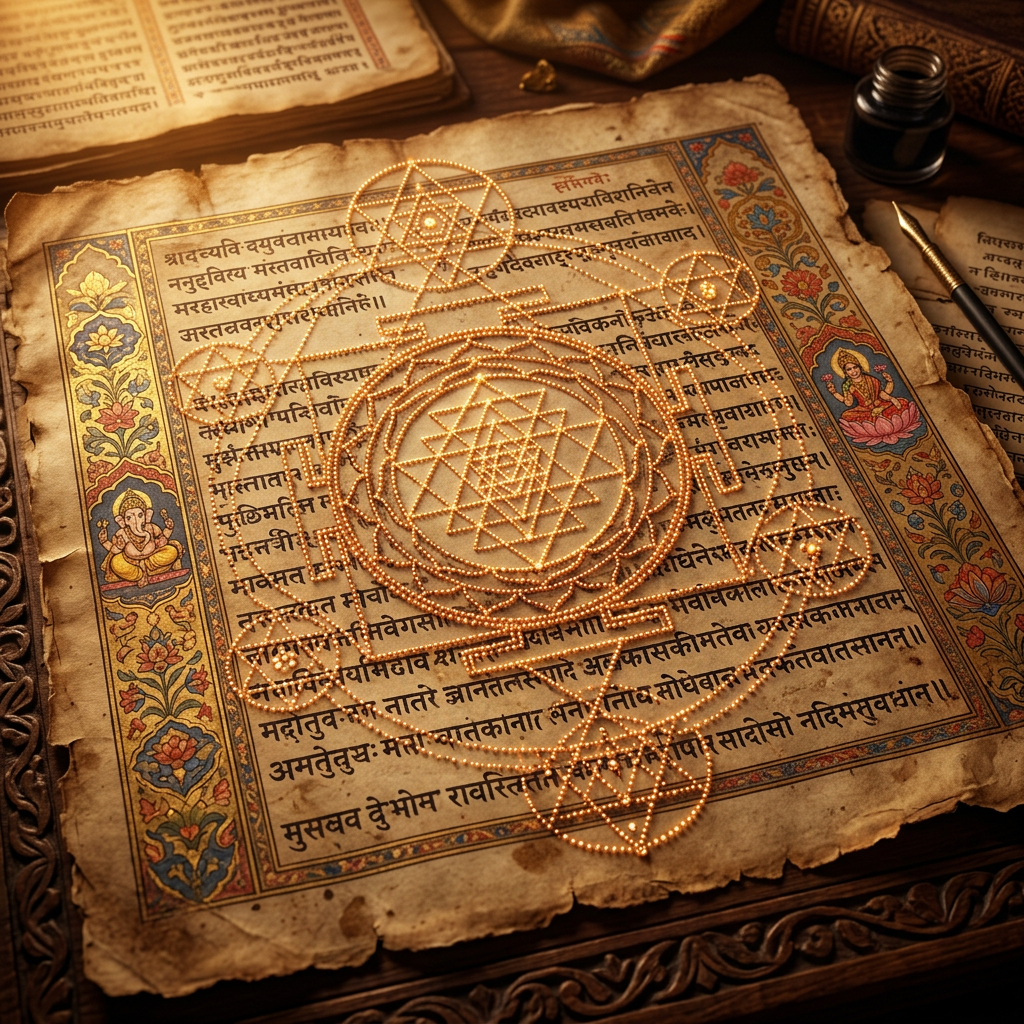
New scholarly research published in the Journal of Ancient Indian History provides a rigorous comparative analysis of the Vaisheshika Sutras and modern particle physics concepts. The study focuses on the school's definition of the 'Parmanu' (atom) as the smallest indivisible unit of matter. Researchers argue that the mathematical logic used to describe the combination of atoms into 'Dvyanuka' (diads) and 'Tryanuka' (triads) represents a sophisticated proto-scientific understanding of molecular structure and chemical bonding.
The paper also explores the Vaisheshika conceptualization of time and space as objective physical realities. By analyzing 4th-century BCE manuscripts, the authors demonstrate that early Indian logicians had developed a system of recursive categorization that matches contemporary scientific taxonomies. This research highlights the deep philosophical roots of empirical observation in ancient India, challenging the notion that Vedic-era science was purely speculative or ritualistic.