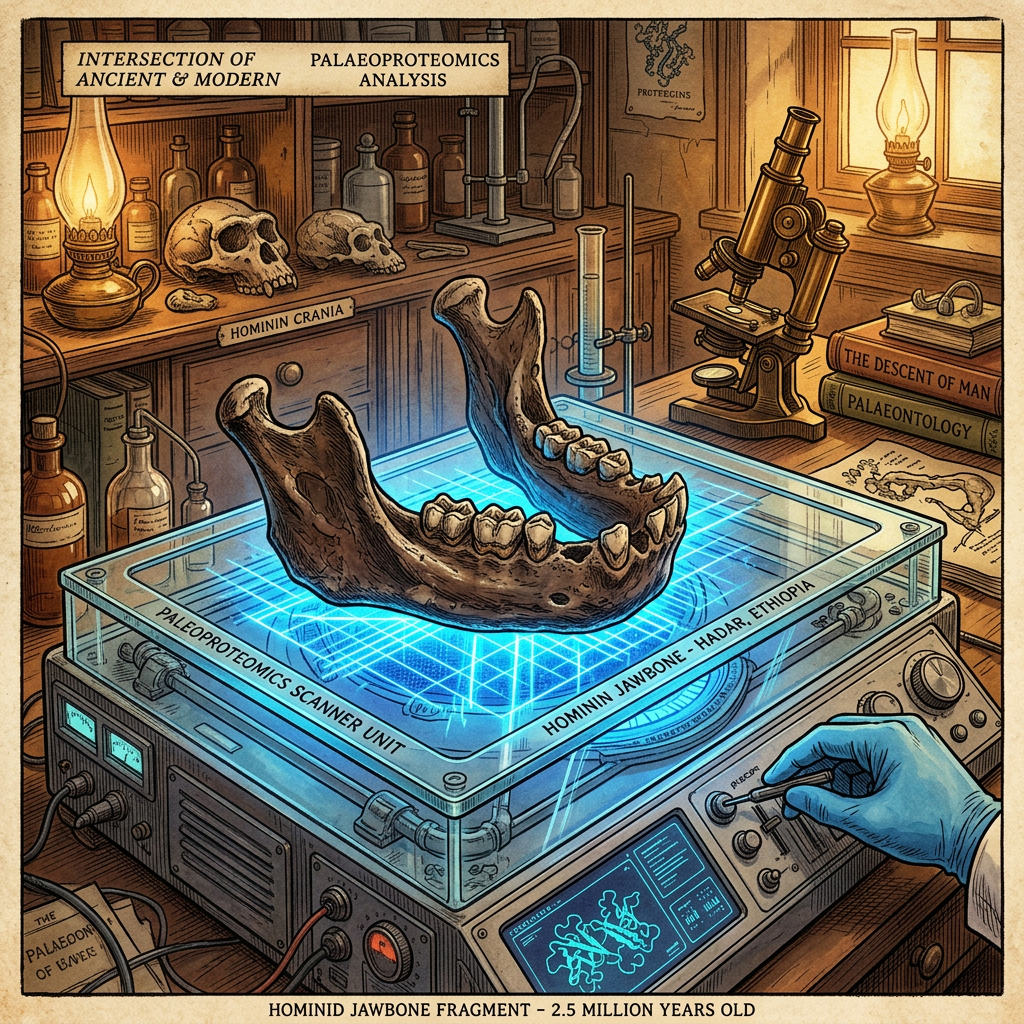
A groundbreaking study published in Nature Archaeology has utilized advanced paleoproteomics to analyze highly degraded bone fragments from the Denisova Cave. Because the specimens lacked viable DNA, researchers sequenced ancient proteins to confirm the presence of a distinctive Denisovan lineage that occupied the region during a particularly harsh glacial period. This finding suggests that Denisovans possessed a much higher level of physiological resilience to extreme cold than previously understood.
The research, led by an international team of bio-archaeologists, indicates that these ancient hominins were utilizing sophisticated bone tools for leatherworking as early as 160,000 years ago. This shifts the timeline for complex cognitive behaviors in the Altai region, suggesting that technological innovations previously attributed to later Homo sapiens were already being practiced by Denisovan populations. The study provides a new framework for identifying hominin species in environments where DNA preservation is poor.