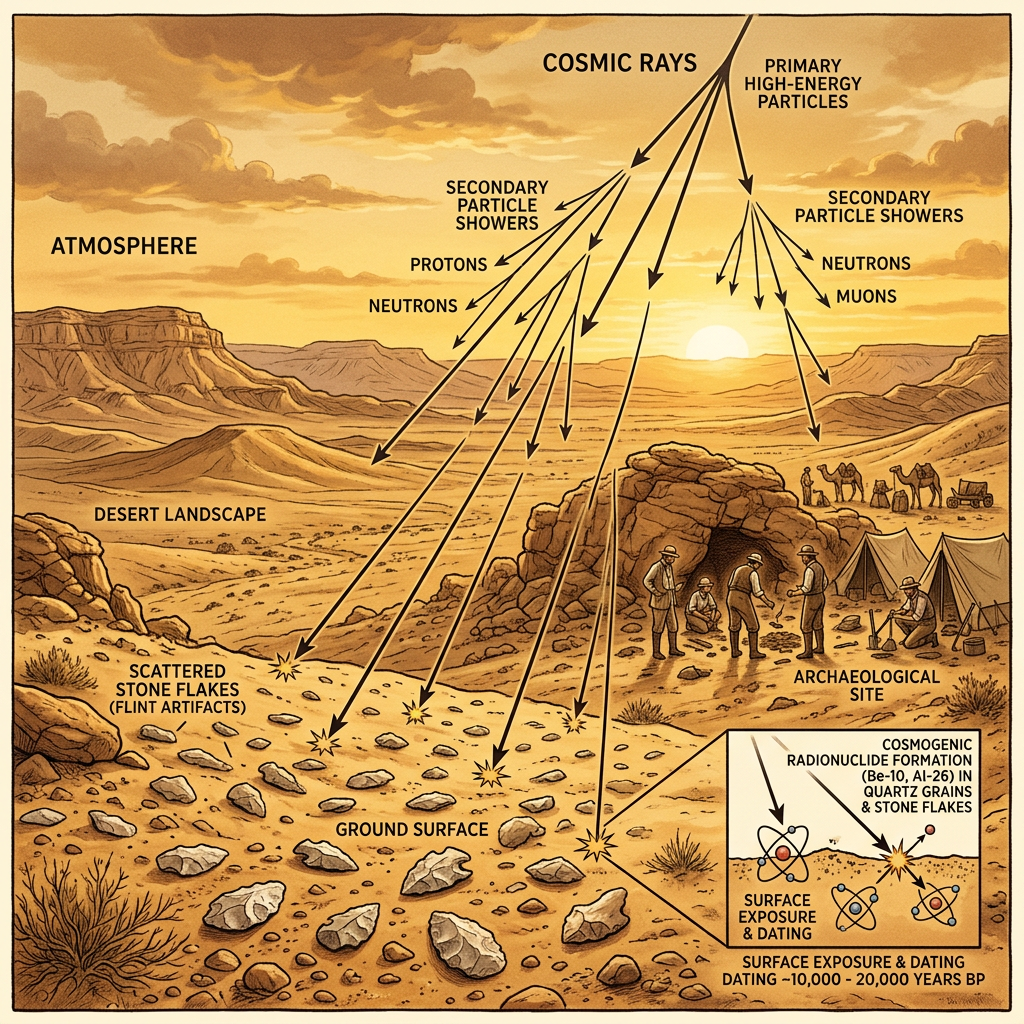
A new study in Science Advances has introduced a refined Cosmogenic Neon-21 dating methodology to examine lithic assemblages found in the Nefud Desert. This technique, which measures the accumulation of neon isotopes in quartz crystals exposed to cosmic rays, has allowed researchers to date stone tools with unprecedented accuracy. The results suggest that human populations were present in the interior of the Arabian Peninsula as early as 155,000 years ago, coinciding with a 'Green Arabia' phase of increased rainfall.
The methodology overcomes the limitations of traditional radiocarbon dating, which cannot reach back far enough, and Luminescence dating, which can be affected by sediment shifting. By isolating tools that remained on the surface since their creation, the team established a firm timeline for multiple waves of migration. This research provides a critical missing link in the 'Out of Africa' expansion model, showing that the Arabian interior was a vital corridor for early human movement.