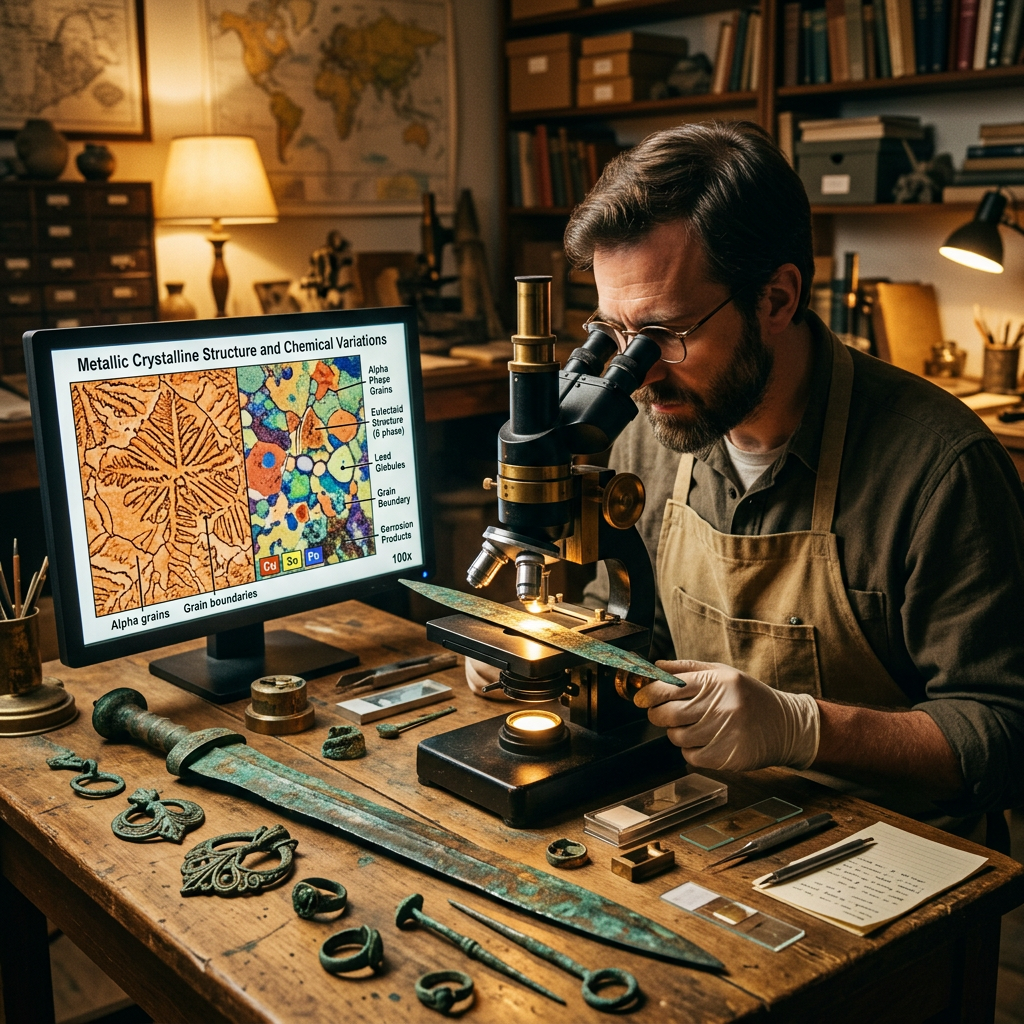
A new paper in the Journal of Archaeological Science has utilized high-resolution lead isotope analysis to track the origins of bronze artifacts from the Tartessos civilization in the Iberian Peninsula. The chemical fingerprinting reveals that while the copper was sourced locally, the tin and lead were imported from as far away as Cornwall and the Mediterranean Levant. Surprisingly, the study found that over 40% of the artifacts were composed of recycled metal, indicating a highly sophisticated circular economy in the Late Bronze Age.
The research suggests that Tartessian smiths were not merely craftsmen but advanced metallurgists who understood how to blend scrap metals to achieve specific levels of hardness and luster. This metallurgical recycling allowed the civilization to maintain its wealth and military edge even during periods of trade disruption. The study provides the first quantifiable evidence of large-scale industrial recycling in the ancient Western Mediterranean.