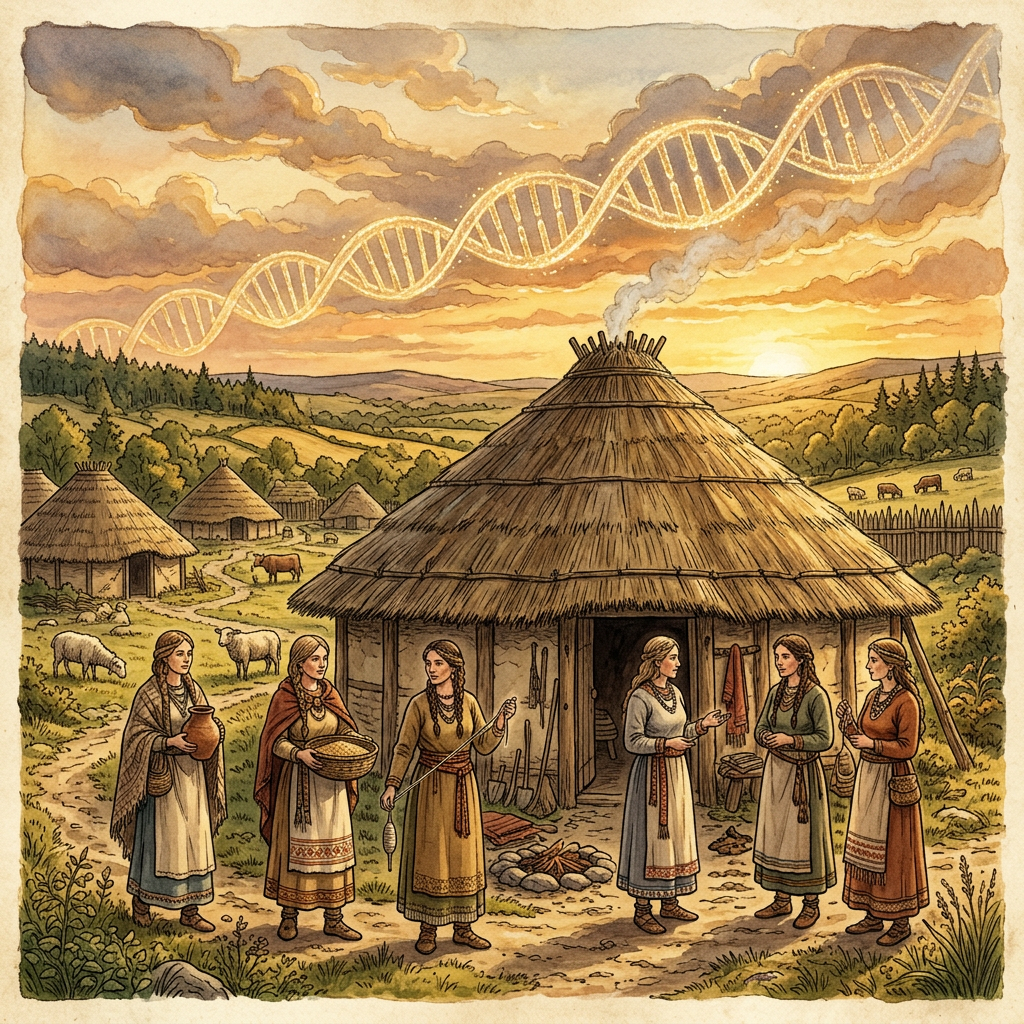
A massive genomic analysis of remains from the Cucuteni-Trypillia culture, published in PNAS, has revealed a surprising social organization in the Neolithic settlements of modern-day Moldova and Ukraine. By analyzing the mitochondrial DNA and Y-chromosomes of individuals within the same housing complexes, researchers found that women were more genetically diverse than men. This indicates a matrilocal system, where men moved into the households of their wives upon marriage, while women stayed in their ancestral homes.
This genetic evidence supports archaeological theories regarding the high status of women in Old Europe, as seen in the abundance of female figurines. The study also identified specific genetic markers for early dairy tolerance, suggesting that these communities were among the first to integrate milk into their adult diets on a large scale. The findings provide a new lens through which to view the social dynamics of Europe's first 'mega-cities' before the arrival of Steppe-related pastoralists.