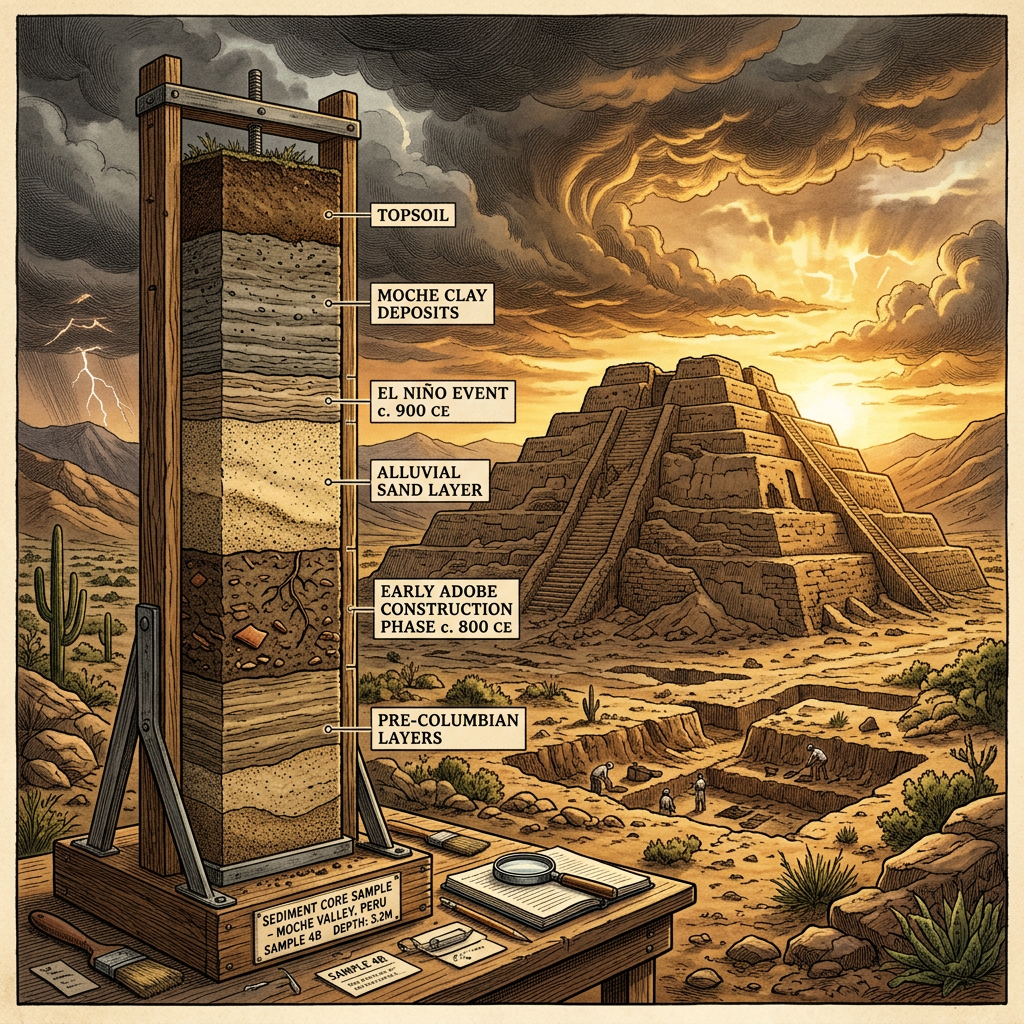
Published in Quaternary Research, a new paleoclimate study has provided the most precise timeline yet for the decline of the Moche (Mochica) civilization of Peru. By analyzing high-resolution sediment cores from coastal lagoons, researchers identified a massive 'Mega-El Niño' event that lasted for three decades during the 7th century CE. This prolonged period of catastrophic flooding followed by severe droughts decimated the Moche's irrigation-based agricultural systems.
The study highlights how the environmental stress led to a total breakdown of the Moche's social and religious hierarchy. Bio-archaeological analysis of remains from this period shows evidence of widespread nutritional stress and a sudden shift in settlement patterns to higher, more defensible ground. This research underscores the vulnerability of even the most technologically advanced ancient societies to abrupt climate shifts and provides a cautionary tale for modern water management in arid regions.