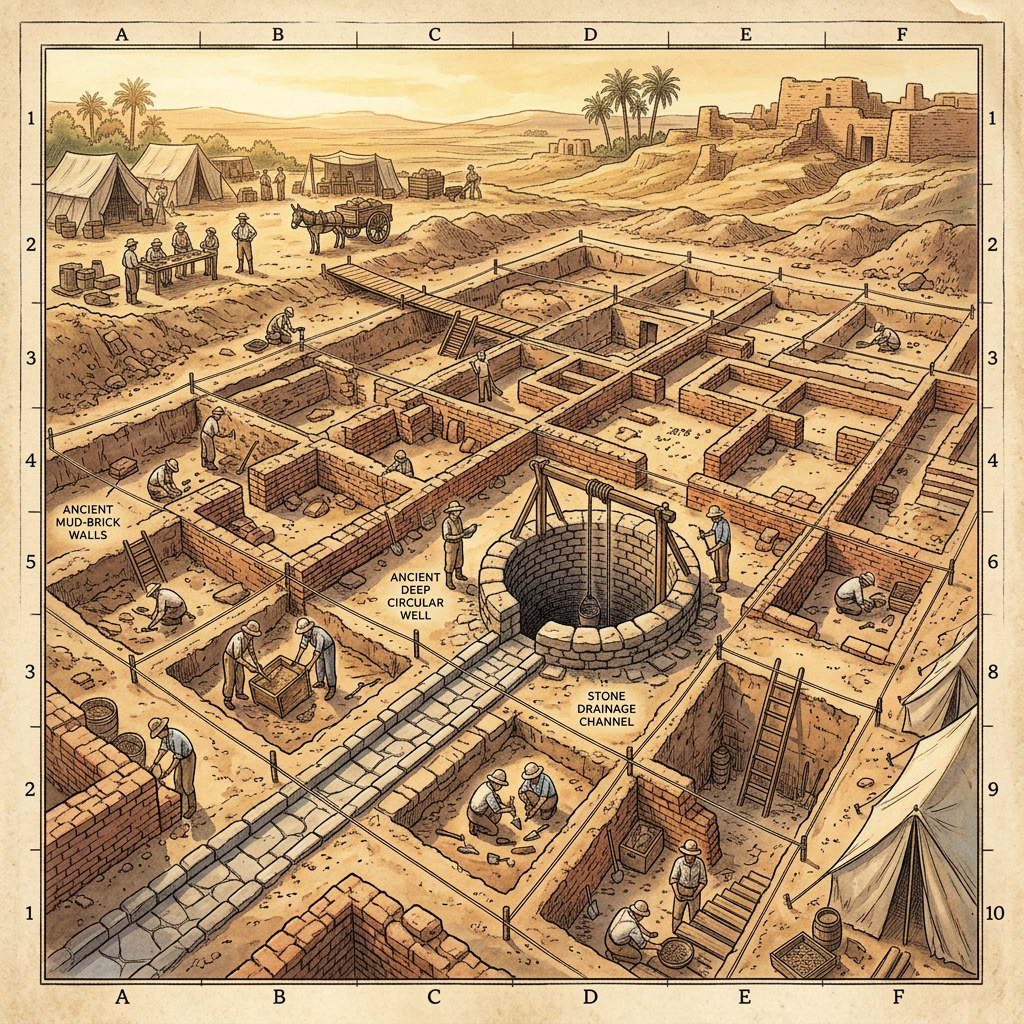
Ongoing excavations at the Indus Valley Civilization site of Karanpura in Rajasthan have led to the discovery of a well-planned residential block believed to have housed the city's elite. The structures are built with standardized fired bricks and feature a sophisticated internal drainage system that connects to the city's main subterranean sewage lines.
Archaeologists found evidence of multi-story houses with central courtyards, paved bathing areas, and private wells. Within these residences, the team recovered high-quality artifacts, including etched carnelian beads, copper mirrors, and finely painted pottery, indicating a high level of craftsmanship and wealth among the inhabitants.
This excavation at Karanpura is significant as it demonstrates that even peripheral Harappan settlements maintained the rigorous urban planning standards seen at Mohenjo-Daro and Harappa. The find provides fresh data on the social stratification and domestic architecture of the Mature Harappan phase in the Ghaggar-Hakra river basin.