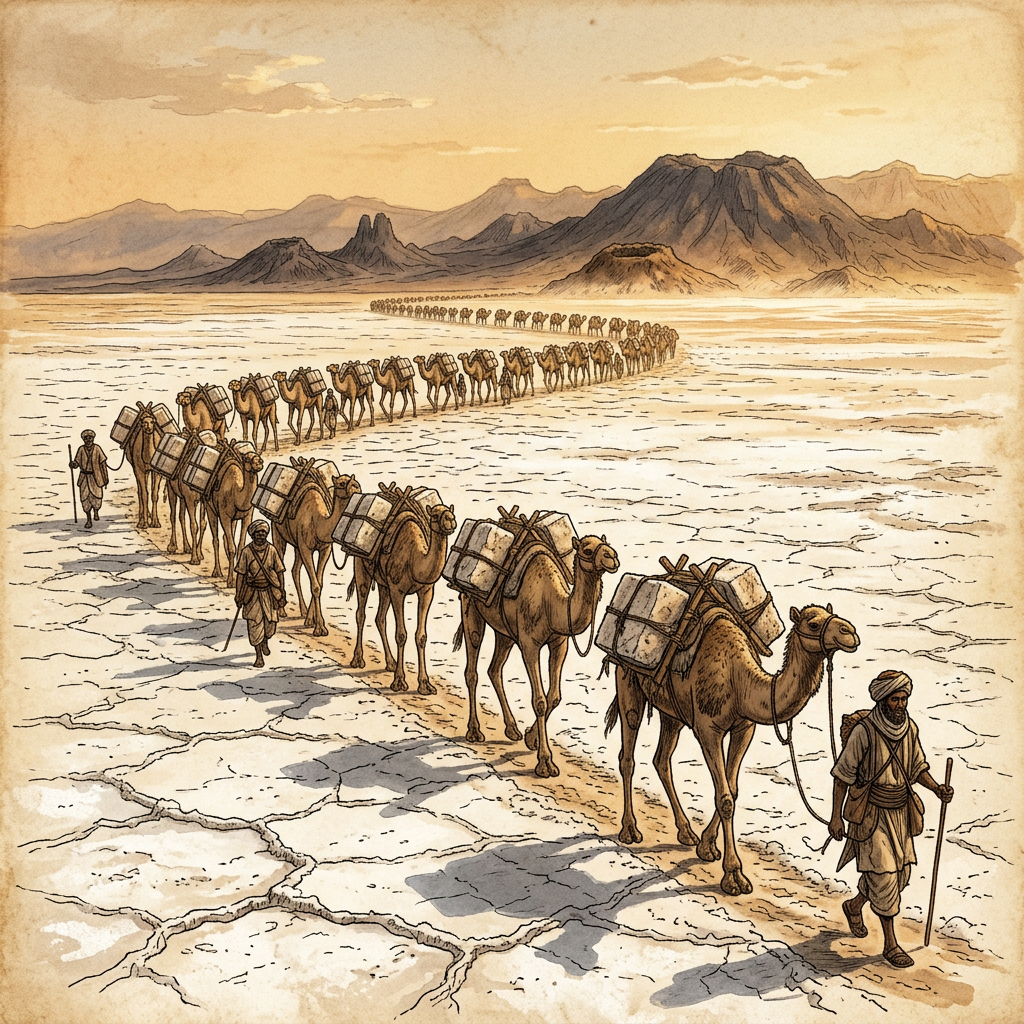
UNESCO has officially inscribed the Traditional Salt-Extraction Landscapes of the Danakil Basin in Ethiopia as a World Heritage site. This cultural landscape encompasses the ancient 'salt pans' where the Afar people have manually extracted salt blocks, known as amole, for over a thousand years, transporting them via camel caravans across the Ethiopian Highlands.
The site is recognized for its 'outstanding universal value' as a living example of a prehistoric economic system that continues to operate using traditional techniques. UNESCO's commitment includes funding for the sustainable management of the salt lakes, which are currently threatened by unregulated industrial mining and changing weather patterns in the Afar Depression.