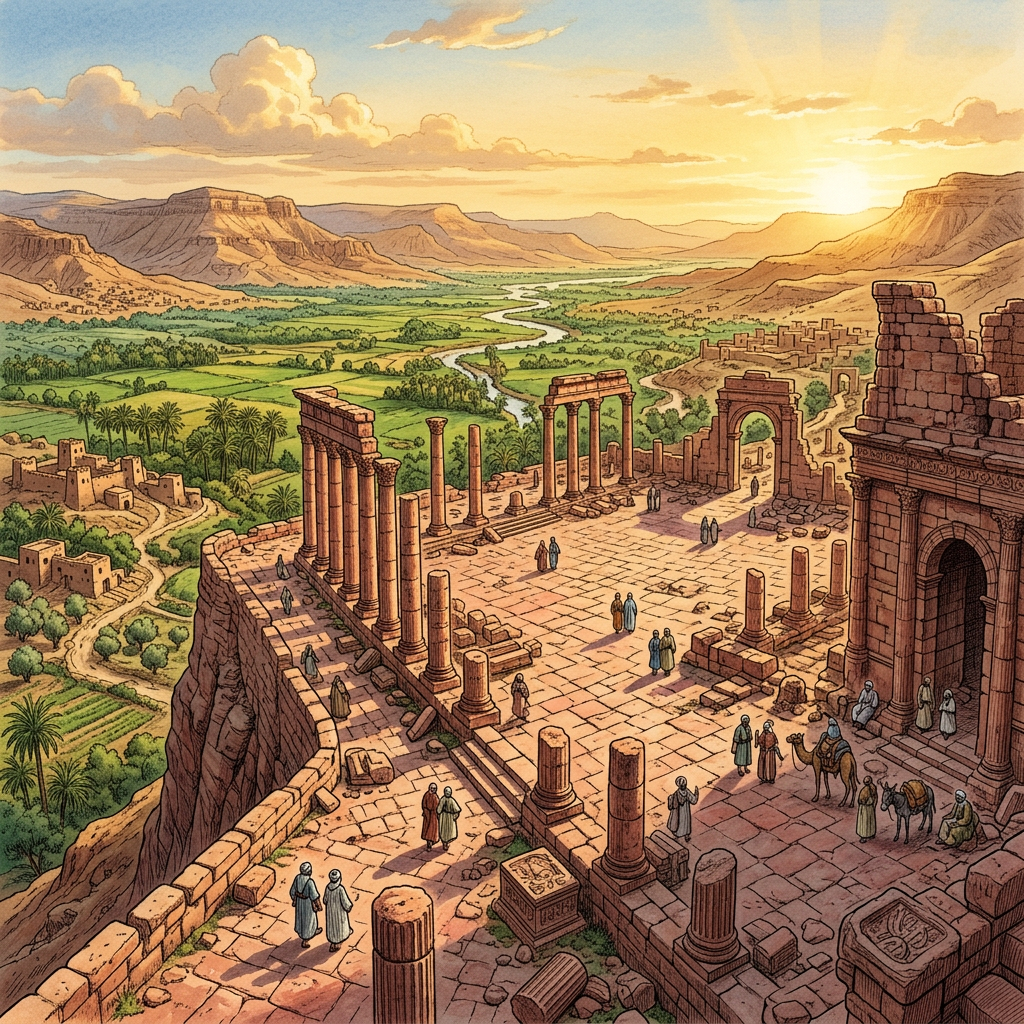
Archaeologists at Tel Hazor have uncovered a unique plaster-paved plaza stained with deep red cinnabar, dating to the Middle Bronze Age. The plaza's layout and the presence of discarded bovine horns suggest it was a dedicated space for communal dancing and sacrifice during the Canaanite Festival of Rebirth, held at the onset of the grain harvest.
Microscopic analysis of the floor surface revealed traces of aromatic resins and wild lilies, suggesting the festival involved the spreading of scents and floral offerings. This 'dancing floor' represents the oldest known architectural evidence of a permanent space built specifically for recurring ceremonial performance in the Southern Levant.