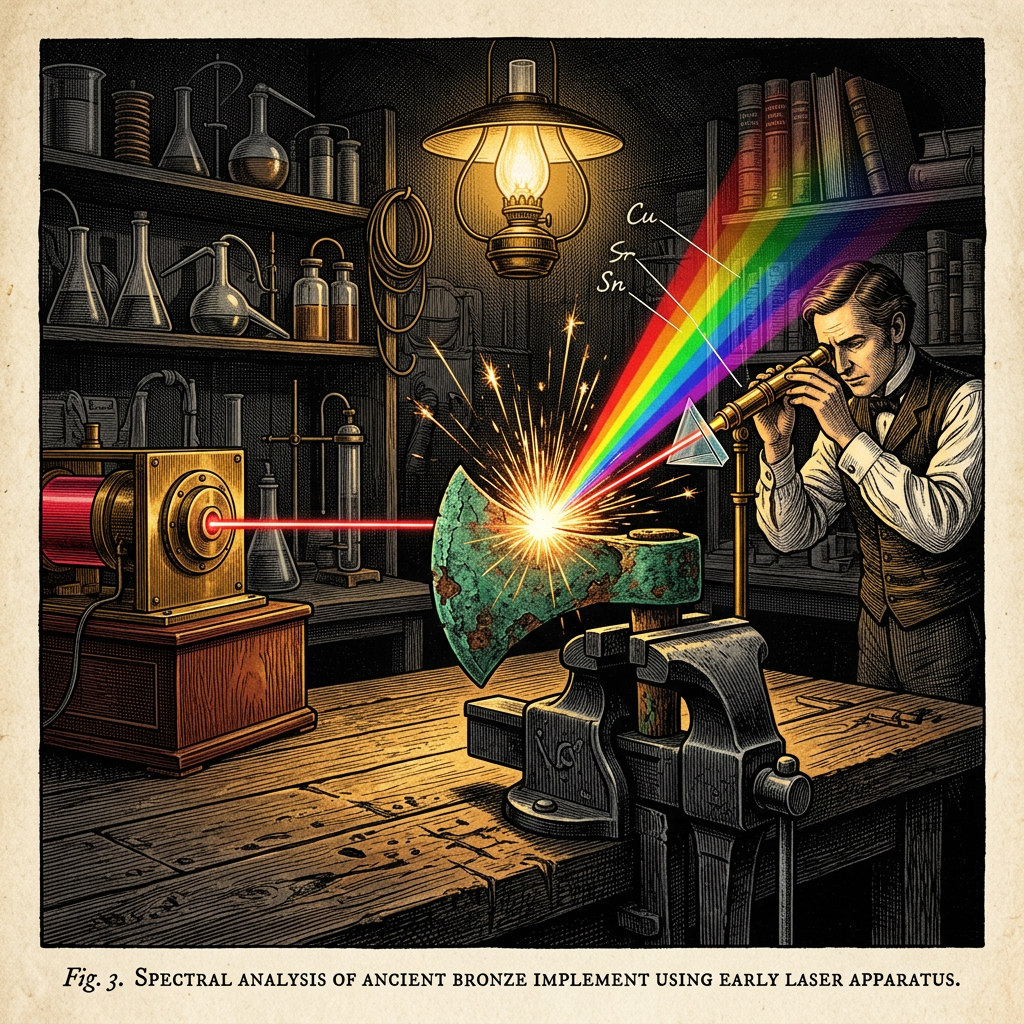
A new study in the Journal of Archaeological Science has utilized non-invasive Laser-Induced Breakdown Spectroscopy to analyze the chemical fingerprints of copper hoards found in the Narmada Basin. The research identifies a highly standardized ratio of arsenic-to-copper alloying that was maintained for over five centuries, suggesting a centralized and scientifically rigorous metallurgical guild system during the late Chalcolithic period.
The precision of these alloys provided the tools with extreme hardness and corrosion resistance, rivaling the early bronze production of the Near East. The data suggests that ancient Indian metallurgists had developed empirical methods to test the purity of their ores and the structural integrity of their casts, implying a sophisticated understanding of material science long before the arrival of Iron Age technologies.