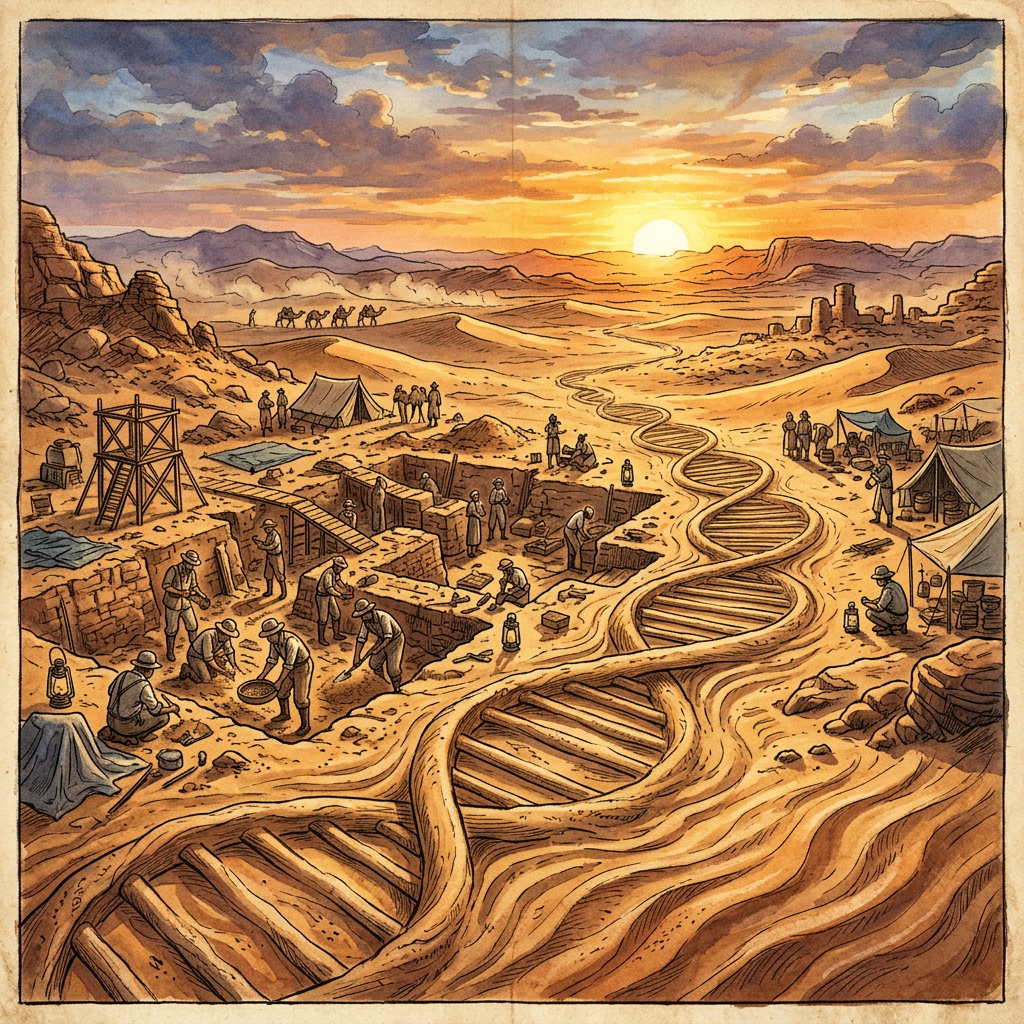
In a landmark paper appearing in Genomics Quarterly, a team of paleogeneticists has sequenced the DNA of human remains dating back to the Last Glacial Maximum (LGM) found in the fossilized dunes of the Thar Desert. The study identifies a unique 'ghost lineage' that possessed specific genetic variants for water retention and metabolic efficiency, allowing them to thrive in extreme arid conditions during the Pleistocene.
This genomic data provides the first biological evidence of how early Homo sapiens in South Asia adapted to the shifting monsoon patterns of the late Ice Age. The findings suggest that these populations did not migrate away during peak aridity but evolved localized physiological traits that are still partially present in certain modern nomadic communities of the region today.