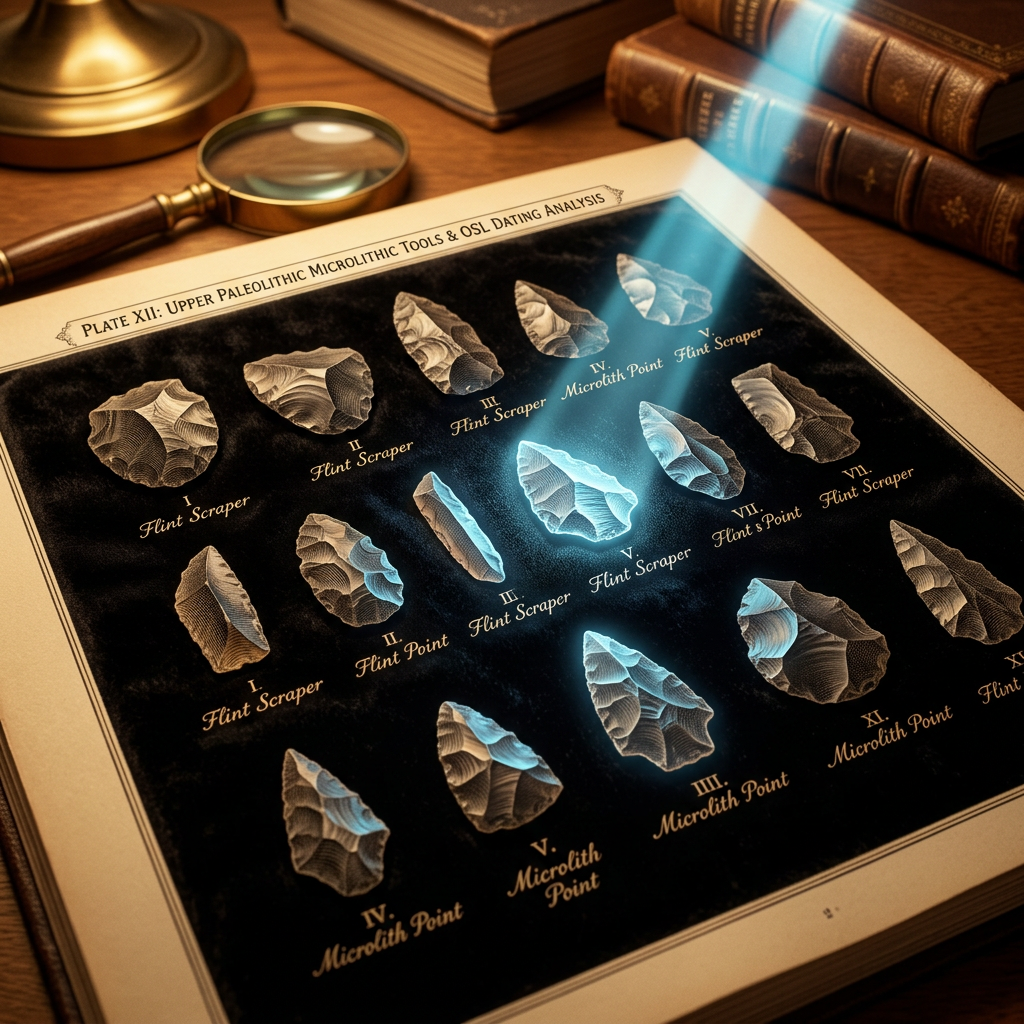
Research from the Deccan College Post-Graduate and Research Institute, published in Quaternary International, has utilized advanced Optically Stimulated Luminescence (OSL) dating on individual quartz grains from the lithic layers of the Godavari riverbanks. The results indicate that microlithic tool production—previously thought to have emerged much later—was active in the region as early as 50,000 years ago.
This discovery places the South Asian 'Small Tool Revolution' on par with the earliest technological transitions in Africa and Europe. It suggests that modern human cognitive complexity and the ability to create composite tools (using wood or bone handles) were widespread across the Indian peninsula during the Middle Paleolithic, challenging previous models of a late technological arrival in the subcontinent.