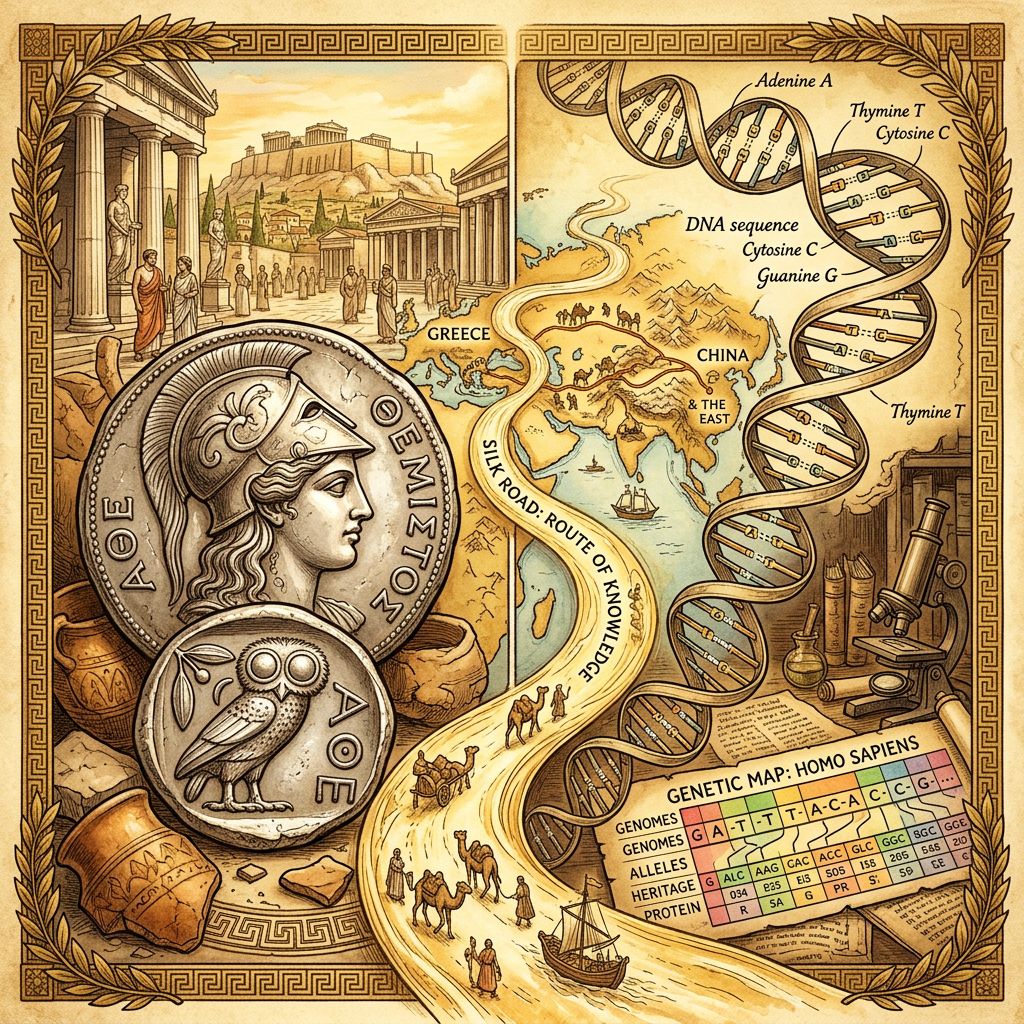
New research published in Science Advances has detailed the results of a large-scale DNA study of skeletal remains from the Sirkap archaeological site. The analysis confirms a high degree of genetic admixture between Mediterranean-origin populations and local Gandharan lineages, indicating that the 'Indo-Greek' period was characterized by stable, multi-generational intermarriage rather than isolated military occupation.
The study utilized high-coverage genomic sequencing to track the maternal and paternal lines, revealing that local high-status women often married into Hellenistic administrative families. This genetic synthesis mirrored the artistic and religious syncretism of the era, providing a biological foundation for the unique Greco-Buddhist culture that eventually spread across the Silk Road into Central Asia.