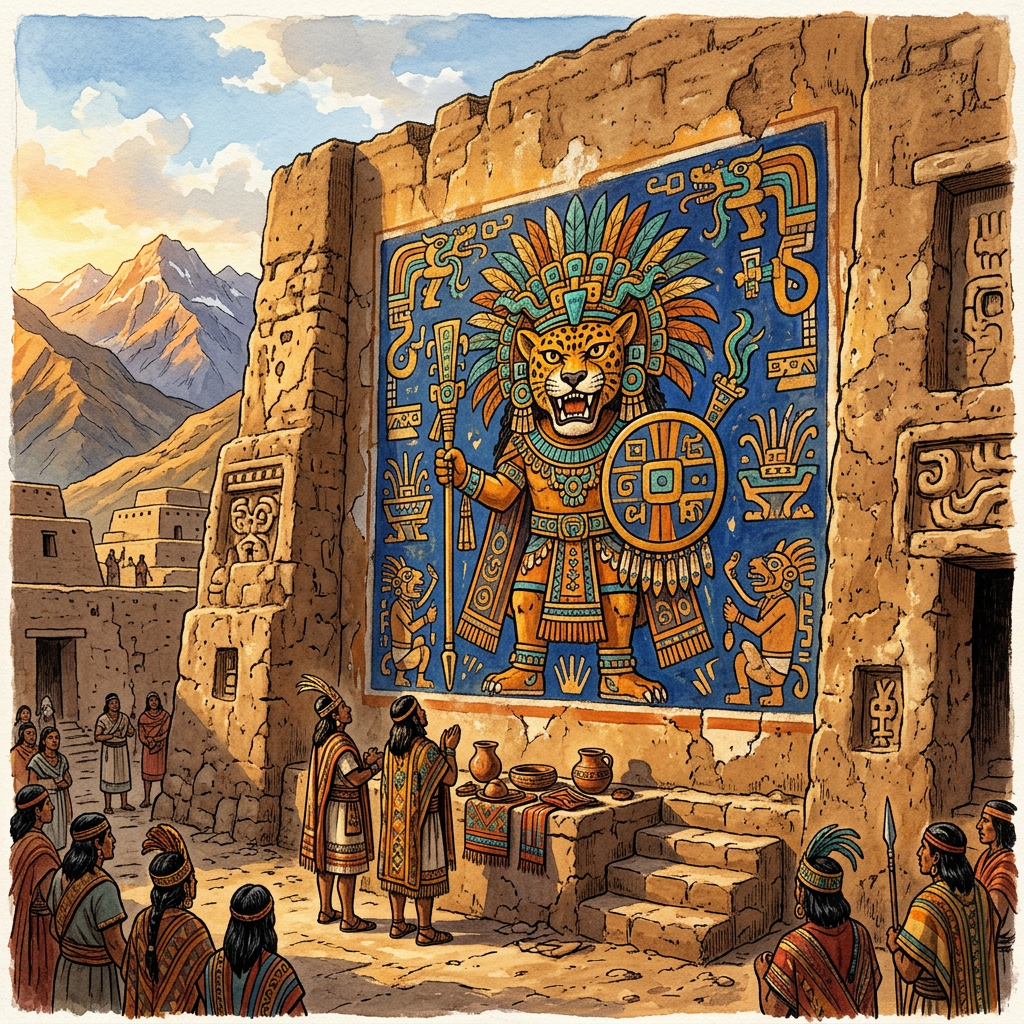
In a major breakthrough for Andean archaeology, researchers in Peru's Chicama Valley have excavated a ceremonial temple belonging to the Cupisnique culture. The 3,200-year-old structure, dubbed the 'Temple of the Rain God,' contains vibrant frescoes featuring anthropomorphic figures with feline traits, painted in a rare blue pigment derived from pulverized lapis lazuli and local minerals.
The temple's design includes a series of steep staircases leading to a high altar where archaeologists found evidence of ritual offerings, including spondylus shells and miniature gold ornaments. The presence of the blue pigment is particularly noteworthy, as it indicates a highly organized social structure capable of long-distance trade to obtain rare materials for religious use during the Initial Period of Peruvian history.