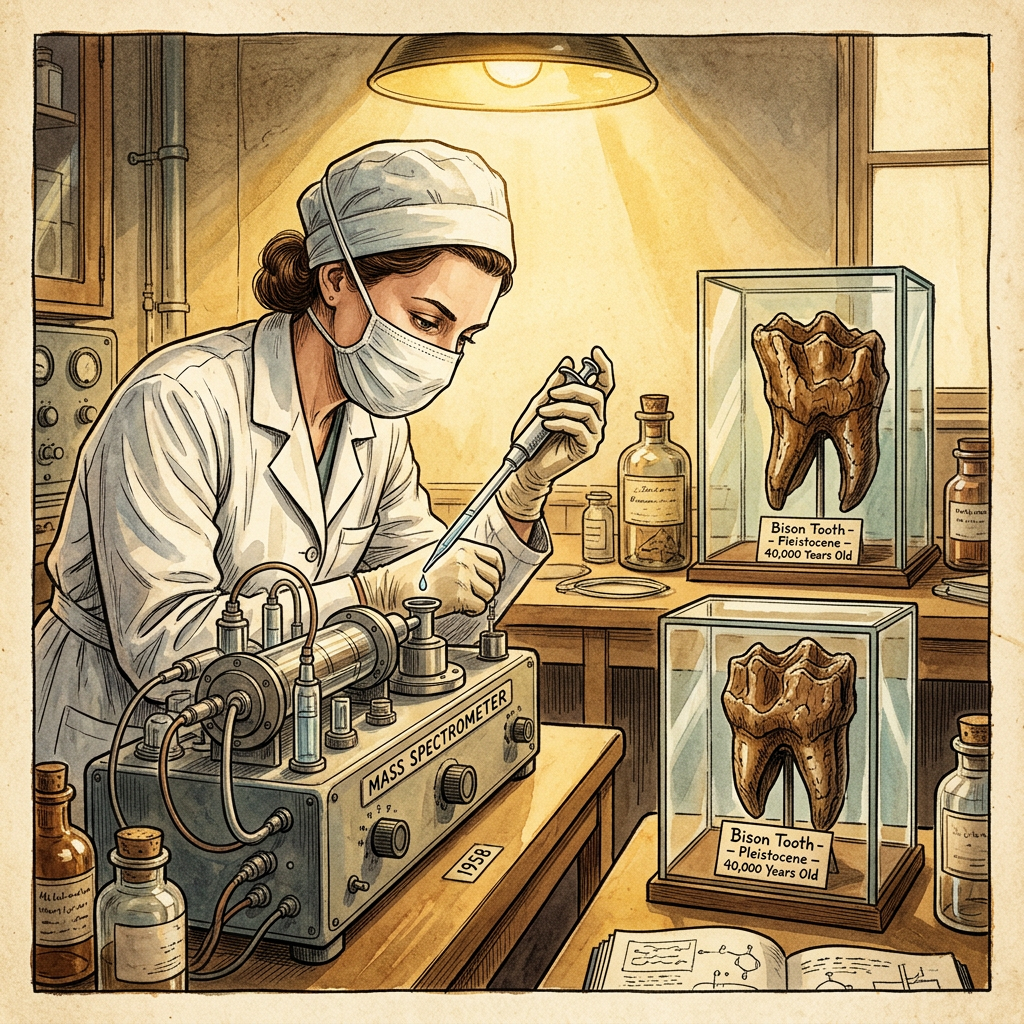
A team of researchers from the Oxford Radiocarbon Accelerator Unit has applied a revolutionary amino-acid compound-specific dating technique to animal bones found alongside human stone tools in the Southern Urals. The results push back the chronology of human arrival in this sub-arctic region to 42,000 years ago, nearly 5,000 years earlier than the currently accepted timeline.
This new methodology allows scientists to bypass potential contaminants in the bone collagen by dating only the specific amino acids produced by the animal during its life. The study published in Quaternary Science Reviews suggests that early modern humans were capable of surviving in extreme high-latitude environments during the peak of the last glacial cycle through advanced tailoring and fire-management techniques.