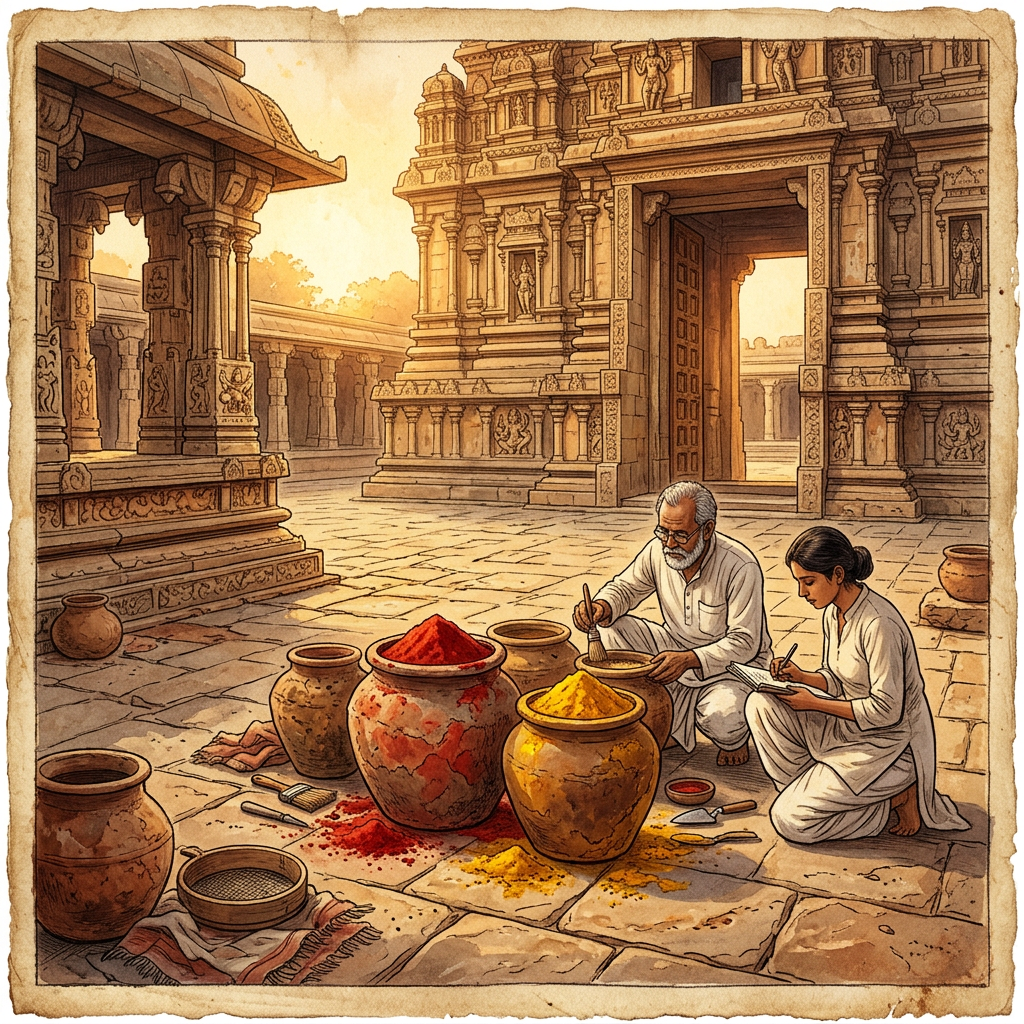
Excavations at the historical site of Mathura in Northern India have revealed a unique cache of specialized ceramic jars containing high concentrations of organic pigments, specifically vermillion and turmeric-based powders. Analysis of the surrounding soil suggests these powders were dispersed in a large open courtyard during a specific seasonal window, pointing to the early practice of spring color-throwing rituals.
While the modern festival of Holi has evolved through various religious lenses, these archaeological findings suggest that communal Basant (spring) celebrations involving the symbolic "painting" of participants were established as early as the Mahajanapada period. The presence of ritual sprinklers made of terracotta further supports the theory of a highly organized ancient festival tradition.