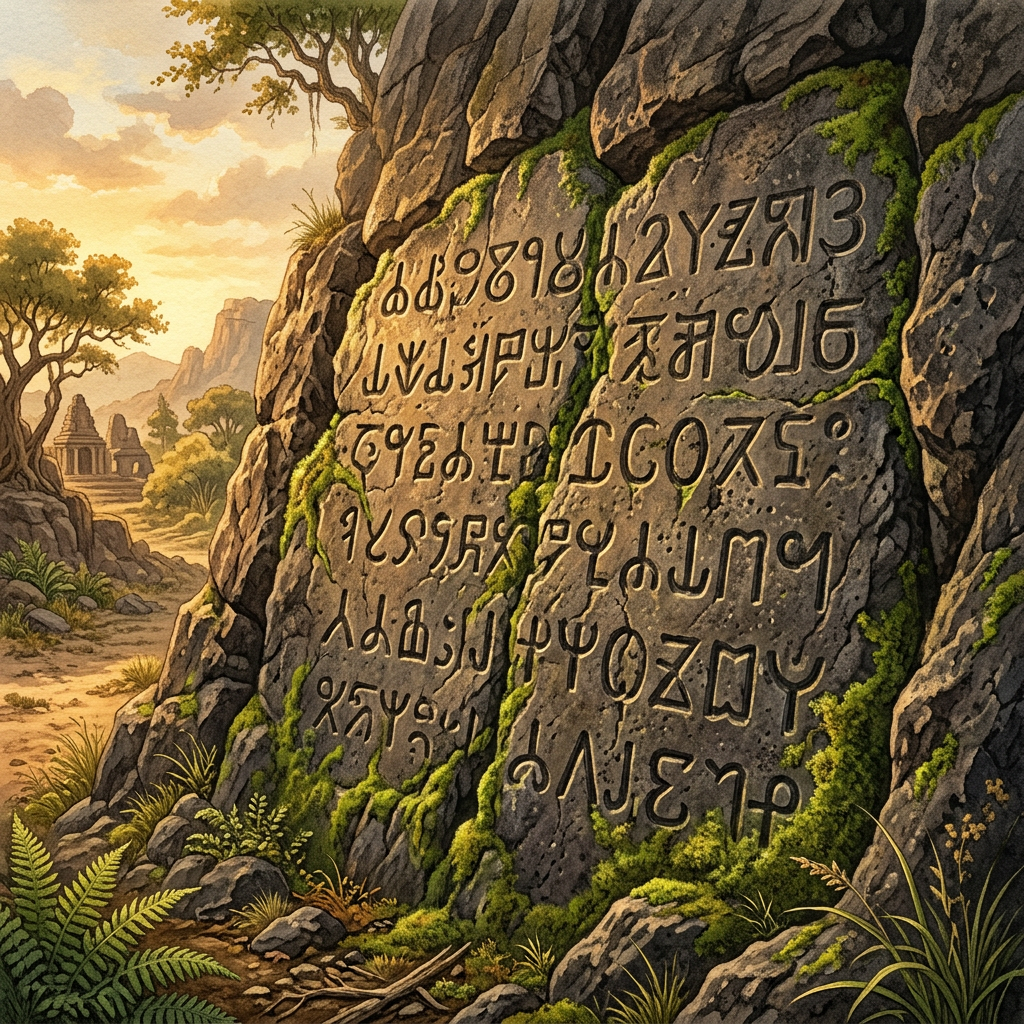
A team from the Deccan College Post-Graduate and Research Institute has uncovered a series of 2nd-century BCE inscriptions in the Sahyadri mountain range. These texts, written in Ashokan Brahmi, are unique because they do not describe royal edicts but rather a local community's ethical code of civic duty, emphasizing the philosophical concept of Dharma as a form of social cohesion and mutual aid.
Epigraphists suggest that these inscriptions pre-date the formalization of many classical legal treatises, offering a glimpse into how philosophical ethics were applied at the grassroots level in ancient India. The carvings detail the importance of 'Dana' (charity) not just as a religious merit, but as a structural necessity for maintaining Rta (cosmic and social order).