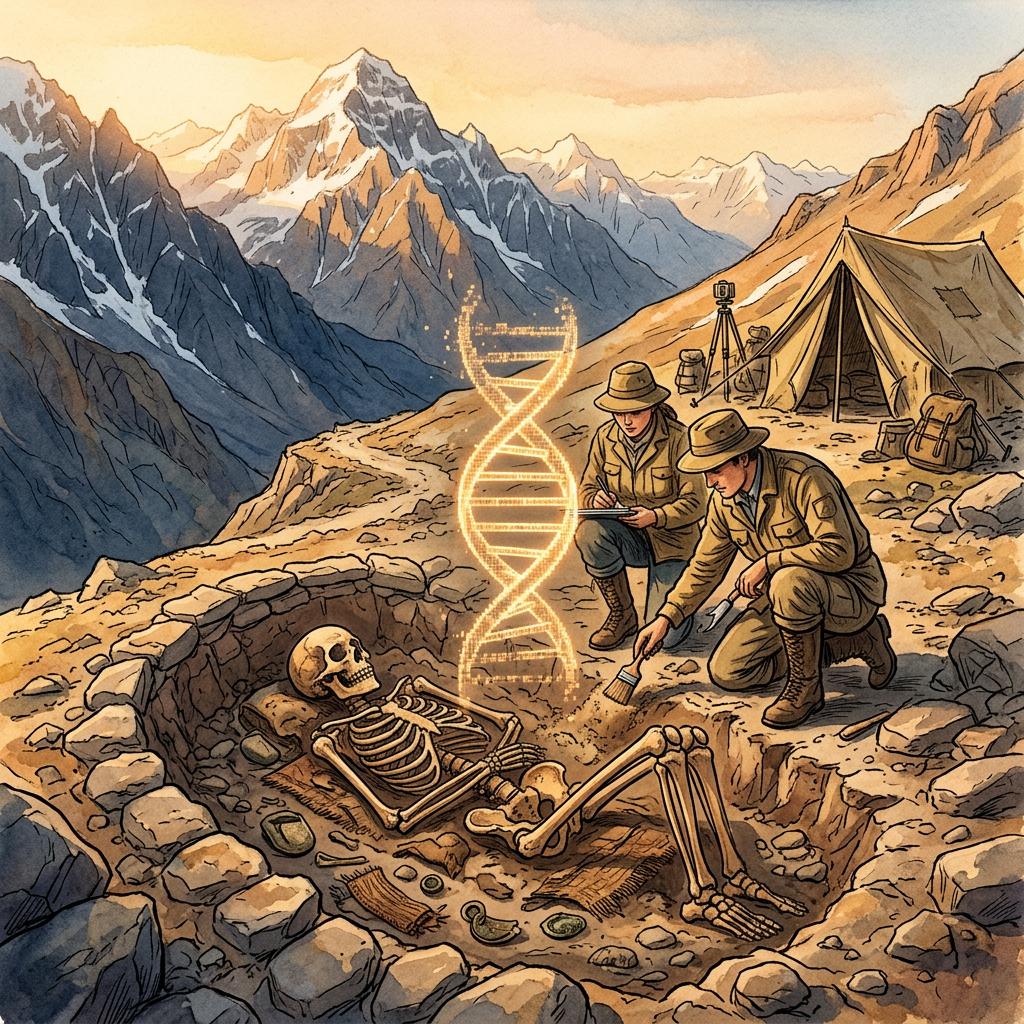
A landmark study in Nature Genetics has revealed the results of a paleogenomic analysis conducted on skeletal remains found in the Fergana Valley, dating back to 3000 BCE. The research team identified a specific cluster of genes associated with resistance to community-spread respiratory pathogens. This suggests that the inhabitants of this ancient trans-continental trade corridor underwent rapid genetic adaptation due to the constant influx of diverse populations and their associated microbes.
The study also found evidence of high genetic diversity, indicating that the Fergana Valley was a melting pot of lineages from the Steppes, the Iranian Plateau, and the Indus Valley much earlier than previously thought. This genetic resilience likely allowed these early urban centers to thrive as critical nodes in the nascent Silk Road trade network despite the high density of human and animal interaction.