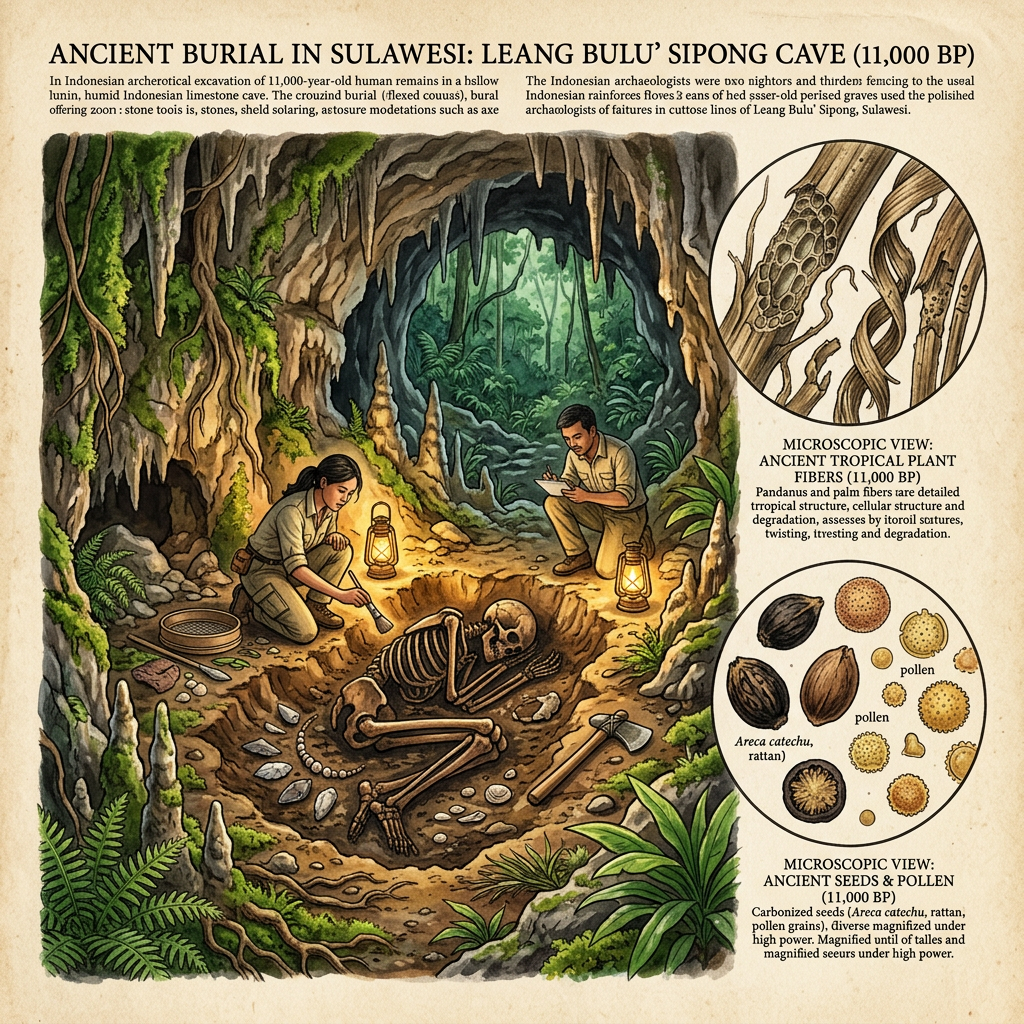
Research published in the Proceedings of the National Academy of Sciences (PNAS) has detailed the genomic reconstruction of a hunter-gatherer who lived in the Wallacea region 11,000 years ago. The study identified unique genetic variations in the metabolic pathways responsible for detoxifying certain tropical plant compounds. This represents the first evidence of human genetic adaptation to the unique and often toxic flora found on isolated Southeast Asian islands.
The individual also possessed a 'ghost' lineage not found in modern populations, suggesting that early maritime foragers in Wallacea were part of a highly diverse and now-extinct branch of humanity. These adaptations were crucial for survival in island environments where traditional food sources were scarce and many endemic plants required specialized biological or cultural processing to become edible.