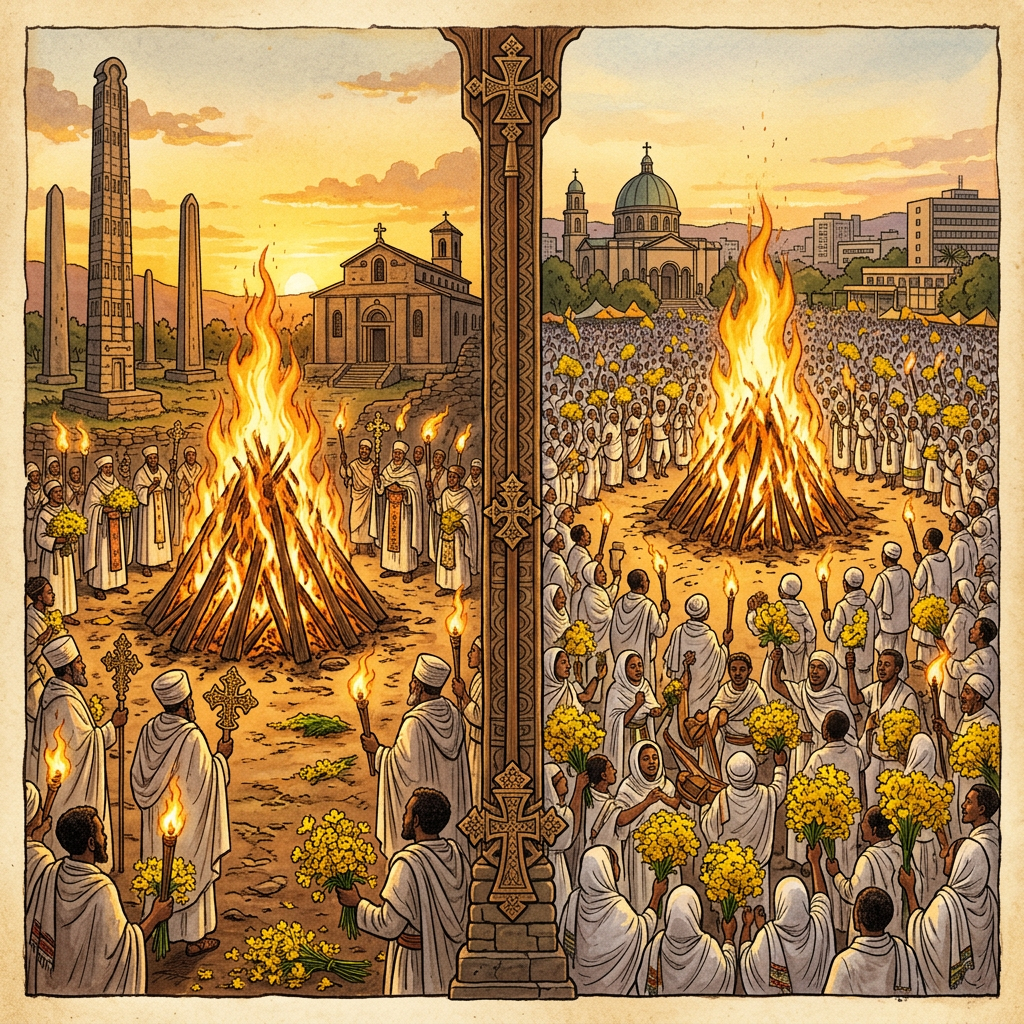
Excavations near the ancient city of Aksum have revealed a series of layered offering pits containing both pre-Christian terracotta figurines and early Christian crosses. The site, identified as a prehistoric sacred grove, shows continuous ritual use through the 4th century CE. This provides a rare physical record of how the Meskel festival (the Finding of the True Cross) likely absorbed earlier seasonal fire and harvest rituals.
Archaeologists found charred remains of 'Adey Abeba' (yellow daisies), which still bloom during the modern festival, in strata dating back 1,800 years. This suggests a millennia-long continuity of seasonal symbolism. The findings underscore the resilience of Ethiopian cultural heritage, showing how ancient floral and fire-based celebrations were adapted into the religious framework of the Aksumite Empire.