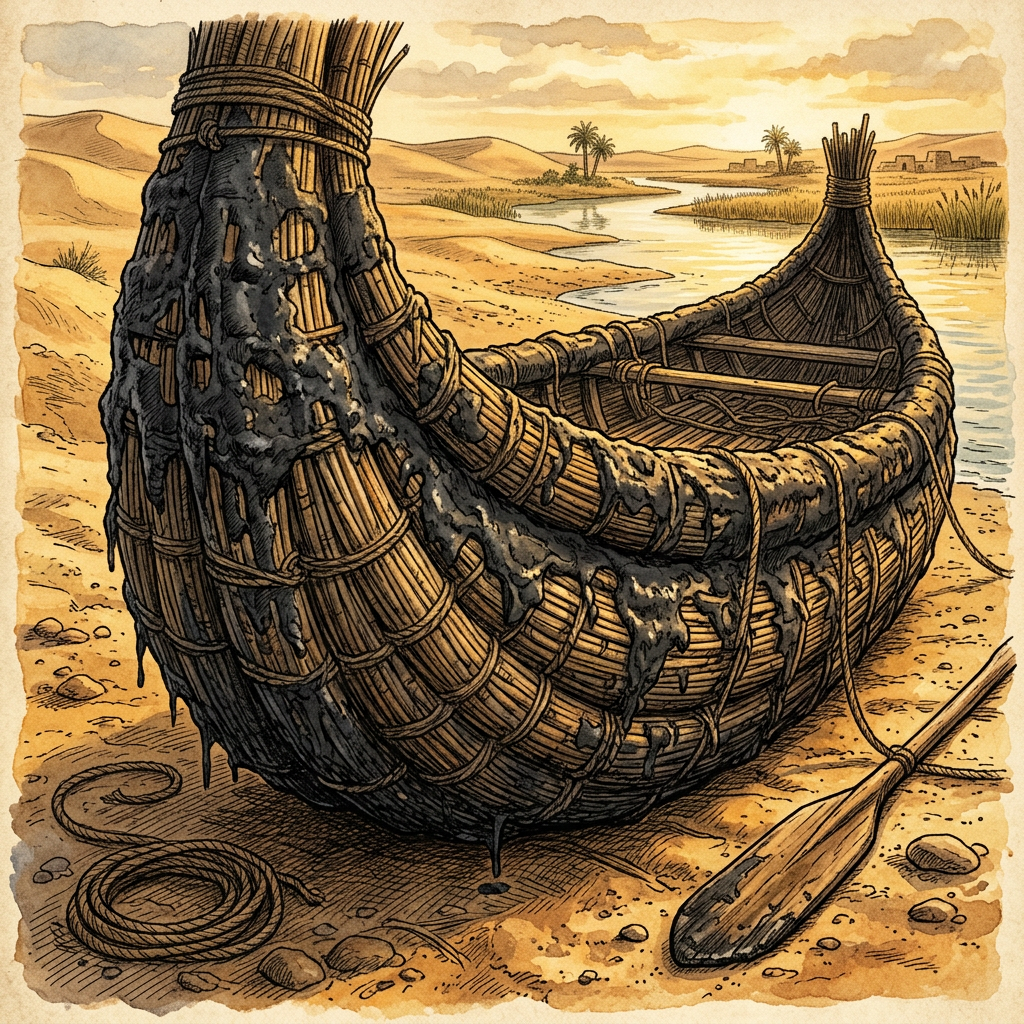
A new chemical fingerprinting study has mapped the 'Bitumen Route', a prehistoric trade network that transported natural asphalt from the shores of the Dead Sea to the great cities of ancient Mesopotamia. By analyzing residues on 5,000-year-old riverboats and building foundations, researchers found that the Dead Sea was the primary source of waterproofing material for the Sumerian civilization, predating local sources in modern-day Iraq by centuries.
The study reveals that bitumen was a high-value commodity, essential for the construction of the world’s first long-distance maritime vessels and the monumental ziggurats. This Early Bronze Age trade network suggests a high degree of economic integration between the Levant and the Persian Gulf, with specialized caravans and river barges dedicated to the transport of these heavy, black mineral blocks through the Syrian Desert.