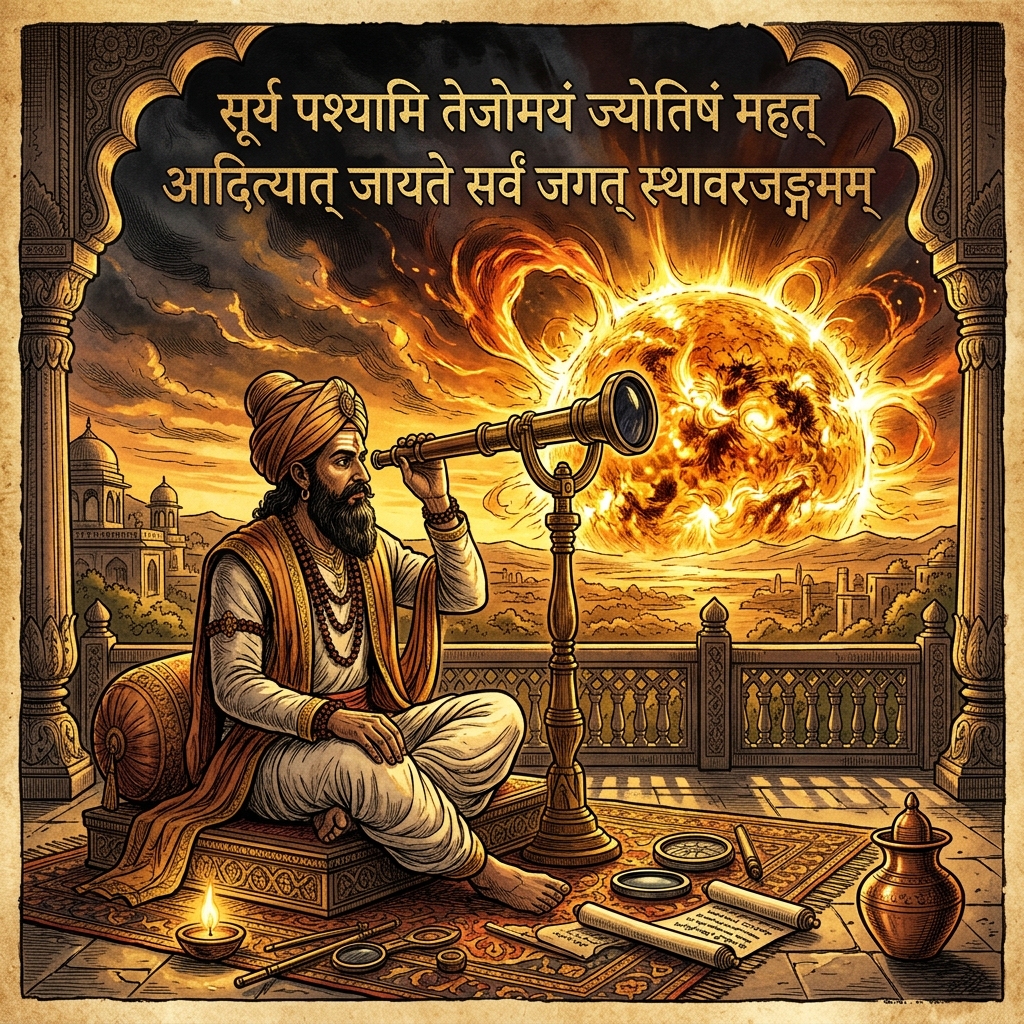
A groundbreaking research paper published in the Journal of Ethno-Astronomy has analyzed newly discovered fragments of the Vriddha Garga Samhita, dating back to the 9th century CE. The study demonstrates that ancient Indian astronomers had developed a sophisticated system for observing and categorizing "Tamasa Kilakas" (dark spots on the Sun), which modern scientists identify as sunspots and solar flares.
The researchers utilized computational models to verify the periodicity described in the Sanskrit verses, finding a remarkable correlation with the 11-year solar cycle. This research suggests that Vedic observational astronomy was significantly more focused on solar physics than previously understood, employing long-term data collection to predict the impact of solar activity on terrestrial climate patterns.