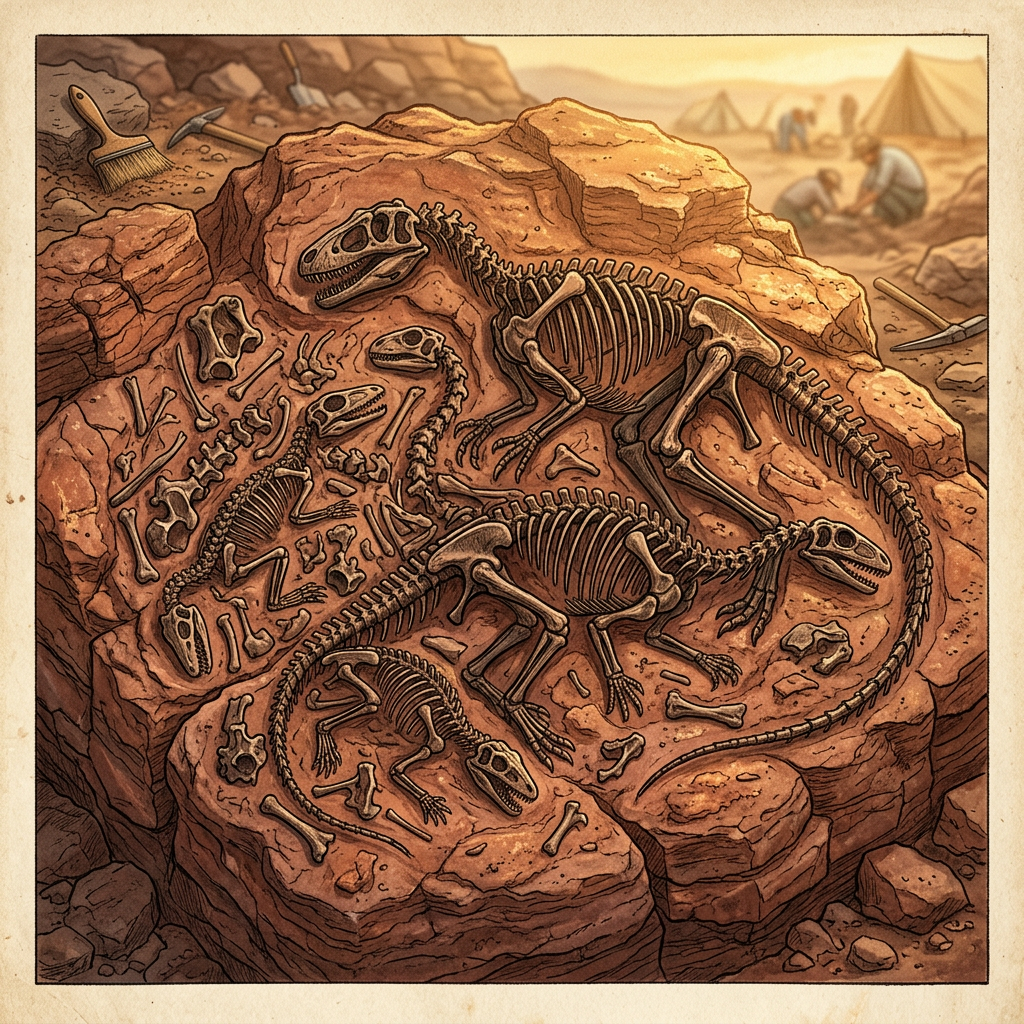
Paleontologists in the Parnaíba Basin of Brazil have discovered a cluster of fossils belonging to a previously unknown Permian-era reptile. The group consists of thirteen individuals of varying ages, providing the first definitive evidence of social herding behavior in land-dwelling vertebrates prior to the rise of the dinosaurs.
Named Socialisaurus brasiliensis, the species shows skeletal adaptations for group defense. The proximity of the skeletons suggests they were overcome by a sudden volcanic event while huddling together, preserving a behavioral snapshot from 280 million years ago that challenges the view of early reptiles as purely solitary creatures.